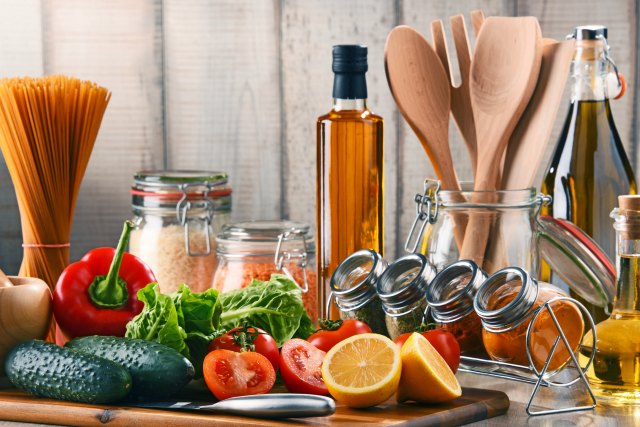
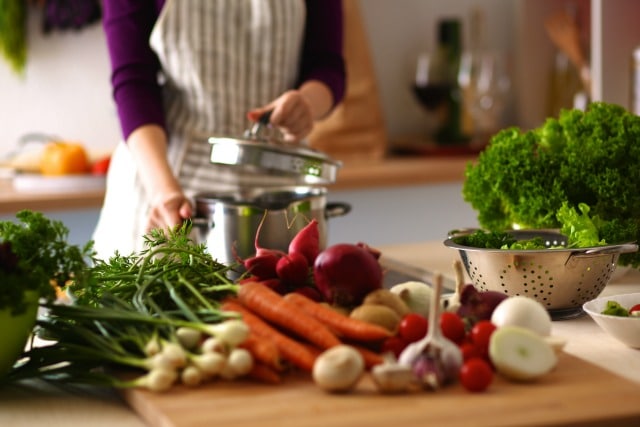
The old fresh v frozen debate. Fresh isn’t blanched so has more nutrients. Frozen doesn’t sit around all year in storage so has more nutrients. Fresh vegetables have more ‘life force’ so are better for your chakras… yep, the debate continues to rage and it’s heated.
But for many of us, the question of fresh v frozen is kind of irrelevant anyway. Most of us don’t eat nearly enough plant food to start with, let alone worry about whether it is fresh or frozen.
I want to take a moment to compare fresh and frozen vegetables from a cost point of view. You see, I’ve had broccoli on my mind a lot over the last few weeks. We eat a lot of broccoli. It’s high in nutrients (fresh or frozen) and it’s one of the few greens I don’t have to force feed DH.
But what to do with the stems? I’ve thrown them in the stock pot, cut them up and to put in the stir fry, I’ve even made broccoli stem soup, but mostly the stem gets wasted. This got me thinking about the true cost of fresh broccoli and whether it is better value (from a purely cost perspective) to purchase frozen.
So I did a little weighing and a little calculating.
(more…)
I generally think that we’re pretty frugal, but sometimes I wonder. So I thought I would share how much we spend on food and groceries, and some of the rationale behind the choices that are appropriate for us. ‘We’ are currently a household of two adults and a cat.
I keep a detailed cash flow budget in excel – basically we track every cent we earn and spend. This year, I did something a little different: I track our groceries in a separate sheet, linking the totals into our overall expenditure. What does this mean? It means that not only can I see at a glance how much we’ve spent on groceries for the month, I can click over a sheet and tell you exactly how much we’ve spent on milk v meat v toothpaste etc for each month and for the year. This also reveals how often we buy things like toothpaste.
Before I give a weekly total I want to tell you exactly what our ‘grocery’ amount includes and how I calculate it.
(more…)
Buying food in bulk and cooking and freezing leftovers for later are both great ways to save money, but they’re dependent on how well we utilise the freezer.
We have a tiny box freezer above our fridge (not pictured), but with a little planning, it’s amazing how much we can fit in. We bulk buy meat – enough to last the two of us between 5 and 10 weeks depending on what I cook. This forms the basis of our menu plans. We plan around what is in the freezer, fridge and pantry to ensure nothing gets wasted.
Below are some tips on making the most of your freezer:
(more…)
We are in the middle of strawberry season here at the moment. I love strawberry season. I make the most of it and eat as much strawberries as I can fit in.
Once the strawberry season rolls to and end, asparagus comes into season, followed by mangos, nectarines, cherries and tropical fruit. At this time of the year, month follows month with one gustative delight after another.
Seasonality is for most a thing of the past. Worldwide distribution and processing and storage methods mean that the produce on supermarket shelves is the same all year round. While having access to a variety of fruit and vegetables all year round certainly has its benefits, there is something to be said for eating as much food in season as possible.
There are many benefits of eating in season. Food in season is cheaper, tastier, healthier, and grown more locally.
There is also the pleasure of anticipation of that first bite of mango in the summer or the creamy richness of cauliflower in the winter. We live today at odds with our natural environment. We are increasingly disconnected with the natural world. Experiencing the changing seasons through food is a wonderful way to get reconnected with nature.
I am fortunate to live in an area where food can be grown in abundance. This can’t be said for all climates, so food transportation is one of those modern wonders that I enjoy the benefit of. For me, the idea of “local” stretches interstate. Strawberries from the farm down the road are really local, raspberries from Victoria are still “local” enough for me. Cherries from the United States are too far. I’ll wait until Summer and savour them in season.
The groceries is one area of the budget that is most variable and that we have most control over. It is also the third biggest expense after house payments and car payments.
But how much should you cut from the grocery budget?
I am certain that you can eat well on a strict budget, often a family will eat better because junk food and pre-packaged food laden with additives is more expensive than food made from scratch at home.
But once you’ve covered the basics of cooking from scratch and eliminating takeaway, how far should you push the dollar before it affects your health and wellbeing?
(more…)
On the menu tonight we will be serving pan seared lamb on a bed of creamed coliban with a side of seasonal vegetables and finished with a jus.
In other words lamb chops, mash and peas with the pan juices.
Gourmet eating is about eating fresh, quality produce and it doesn’t have to be expensive. If you think about what you get in a good restaurant, it’s just basic ingredients like meat and vegetables jazzed up. And anyone can do this at home easily everyday for a fraction of the price. Fresh food is tastier, healthier, and, if you shop right, eating fresh food will always be cheaper than pre-packaged convenience foods or take away.
(more…)
The chicken shop where I used to live sold 3 whole chickens for $12.
Out of this I can portion and freeze:
- six chicken breasts
- 6 drumsticks and
- 6 thigh fillets or
- 6 Maryland pieces
- 6 wings
- backbones for about 9 litres of chicken stock.
Depending on what I cook, that’s about 10 chicken meals for the two of us plus stock at around $1.20 per meal for two.
If I were to buy just the six chicken breasts alone that would cost over $12. Also if I buy the stock in the tetra packs rather than cook it myself, for 9 litres it would also cost well over $12.
Besides saving money, you also have control over your cuts of meat. It is often hard to get chicken breast with the skin on, or thigh fillets with the bone still in as these cuts have become less popular. If a recipe calls for these cuts, then you can portion them yourself.
If you’ve never cut up a chicken before, it can be a little awkward at first and messy. Using kitchen scissors or shears makes the job much easier. It takes about 10 minutes to portion a chicken.
The video below shows you how to portion a chicken. If you want to remove the bone from the thigh or breast meat, have a look at these links to show you how. Also, if you want skin free thigh and breast pieces, the skin pulls off quite easily.
When I first began to fend for myself, I naturally found myself menu planning. I lived with two other adults, and the job of shopping and cooking fell to me. The only way I could feed three adults on less that $20 each a week was to plan ahead.
While this was a few years back and the cost of food has risen a lot since then, I can still feed hubby and I for around $80 per week.
(more…)
The World Health Organisation has raised it’s flu alert to phase five. Under the Australian Federal Government’s pandemic plan, it advises that we should be stockpiling two weeks worth of food and supplies “just in case.”
While this may seem all a bit panic stations, stockpiling some food isn’t a bad idea generally speaking, particularly if you live in an area where bad weather affects your ability to get to the shops for food. Pandemics and other large scale emergencies aside, there are also personal circumstances (something as small as a broken down car or a day of laziness – or busyness) that can affect our ability to shop for groceries. Having a supply of food in the house provides a buffer for such occasions.
Stockpiling food also means that you can take advantage of bulk discounts on food and by planning ahead, take advantage of grocery specials. A stockpile helps reduce the number of times that you need to go to the shop, saving you petrol. And having food on hand that is easy to prepare helps prevent the need to buy expensive takeaway or convenience foods on busy days.
(more…)
Yesterday I read a post on beingfrugal.net about saving money using coupons. The exercise was to see how many groceries could be bought with $50 and was sponsored by a coupon company. The whole point was to see how much could be saved using coupons. You can view the video here.
(more…)