If you spend just a little time on frugal or personal finance websites, you know that there are some habits that seem to symbolise frugality. These habits have taken on an elite kind of status to be used as a yard stick against which to measure whether or not you’ve made it in the frugal world.
Yes, I’m being tongue in cheek here. What is frugal to me isn’t going to be frugal to you and vice versa. But I thought I would share some of the more popular habits that get touted as frugal.
You know you’re frugal when…
(more…)
This is the question that JD asked on his personal finance site Get Rich Slowly. He was quoting John T. Reed who argues that being frugal is necessary for building wealth.
The question that JD asks is, is frugality something that you have to put up with until you’ve made it, or is frugality a way of life?
(more…)
I was picking family up at the airport the other day, and at the ticket station the man in front of us was having awful trouble getting the machine to take his money. He needed to pay $20 and despite trying a hundred different ways, the machine just wasn’t going to play. As a result, quite a queue formed behind him as we all waited our turn.
Soon I heard murmuring and shuffling, and the man having trouble got more flustered. My brother voiced what I suspect everyone else was thinking: “Why doesn’t he just get out of the way and let everyone else through, the selfish man!”
What I was thinking was: “I wish I had cash on me to swap with him and put the poor guy (and the rest of us) out of his misery.” I asked my mother, who had no cash on her either, and no one else offered. Eventually he gave up and walked away.
I think that I would have thought the same thing as my brother not so long ago. It’s such as small shift in perspective but one that I’m liking.
Maybe it’s a sign of maturity, or maybe not, but I’ve really been giving long hard thought to some of my values and attitudes. Hours of spare time has given me time to reflect on a few things. On of them in particular is my attitude towards my family, to the community, to the environment and to the future.
I don’t want to give the impression that I’m a shining star or an example to follow, I fail far more times that I succeed. It’s just something that has been on my mind lately, and I want to try to ‘walk the talk’ and be more accountable.
One thing in particular that has been on my mind is moving towards an attitude of giving rather than taking. I want to move away from the “what’s in it for me” attitude. It’s not easy, but I’m working on it.
I think that generosity starts in our minds and with our attitudes towards ourselves, each other and towards our environment and then extends through the actions that we do.
Part of this reflection on shifting my attitude has been a growing concern about the amount of things that I ‘consume’. We are pretty frugal and far from being typical ‘consumers’ yet it still concerns me how much I contribute to our environmental degradation by our unsustainable lifestyle. I’m not sure that I am going to have to live with the consequences of my decisions or actions, rather generations to come are going to have to deal with them, and that doesn’t seem very fair or show much forethought. While governments and big businesses certainly play their part in creating a sustainable future, I don’t think that should be an excuse for forgoing personal responsibility. I have control over personal responsibility and it is where I can make the most change. I’m not advocating moving back to the dark ages, but to move forward in a more sustainable and responsible manner.
So what exactly am I doing? Well, not enough actually. But I’m working on it. Slowly. And I’m excited because it is very freeing and empowering to take responsibility for your own life and to live by the values and standards that you set for yourself rather than living by the conventions set by others.
Like everything, it begins with a shift in perspective, a different way of thinking. And I’ve been doing a lot of thinking lately. Now it’s time to turn it into action.
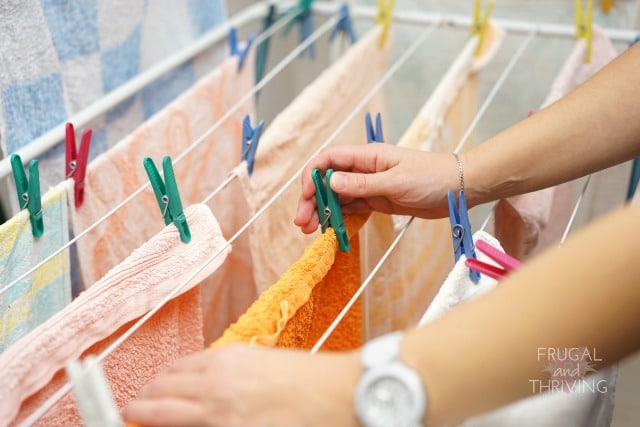
Do you squeeze the absolute last smidgen out of the toothpaste tube, or use a spatula to get the last dribble out of the jam jar? Do you experiment to find the absolute minimum amount of detergent needed to get a load of washing clean? Have you worked out how many dollars a year you save if you buy home brand, or if you have one night a week without electric lighting?
Is it worth saving a few cents here and a few cents there? Is a penny saved really a penny earned? Sometimes I’m unsure whether I should reveal the savings I make on certain items. I imagine you saying “$30 a year, 10c a load, big whoop!” But taking control of the small savings is the essence of a frugal life and there are a few good reasons why sweating the small stuff can be worth the effort.
Small amounts across a range of expenses add up. A couple of dollars here and there may not seem like it’s worth the effort, but combining the savings across all expenses then it starts to add up. $1 saved on the bread, $1 on the milk, $2 on the eggs etc and before long you could reduce your grocery bill significantly. $20 saved on the groceries, $20 saved on the electricity, $10 saved on the telephone each month and you have an extra $50 in the pocket.
There are more opportunities to save small amounts than large amounts. It’s great to save thousands on the purchase of a new car, or hundreds on a new washing machine, but these purchases happen infrequently. The opportunity to make small savings here and there occur every single day.
It’s easy. Giving the toothpaste an extra squeeze, buying home brand, turning out the light takes little effort.
It is a strategy that is available to everyone. No matter what your circumstances are, anyone can save a few cents or a few dollars here and there.
Combining small savings with compounding increases the payload. I have written in the past about the power of compounding both as a means to increase savings and to reduce debt. It is a simple investment strategy that anyone can put into action, no matter how much money you have to start with. It can be surprising how much wealth you can build over time using basic savings coupled with compounding interest. Every journey begins with a single step. Don’t wait until you’re wealthy before thinking of getting wealthy.
You’re often saving more than just money. Saving money is a result of reducing consumption, recycling, reusing and the environment benefits just as much as your hip pocket.
It’s fun. Frugal people live to save money on the little things. The idea of waste seems unacceptable. The challenge to save a few cents gets the heart racing a little quicker. Thrifting is an easy hobby to get into and enjoy.
What does ‘thriving’ have to do with being frugal? If anything, being frugal seems the opposite to ‘thriving’. Before the credit crunch, being frugal had a bad name. It was sneered at. In an age of consumerism we strived for bigger houses, better cars, more stuff and higher capital gains not saving money and conserving resources.
But I think that living frugally is synonymous with thriving in life. I don’t think that you can have one without the other. Because being frugal is a whole life attitude. It embraces so many more things that just saving money.
(more…)
I’ve been looking for some extra ways to recycle things around our house.
When it comes to recycling it’s easy to get lazy and just chuck everything in the bin, or not rinse things first, or not hoard stuff “just in case”.
Our body corporate hasn’t put in recycling bins due to “lack of room” so everything goes to the tip, which is a big guilt trip for me.
Really, after compiling this list, I am only limited by imagination as to finding ways to recycle things around the house and I have been re-motivated to reduce our waste.
(more…)
Army disposal stores have all sorts of useful, inexpensive things for camping, travel, outdoor living and picnics. But they also stock items for everyday use around the home.
We have quite a few things purchased from the disposals store.
A billy, a flask and tin cups for camping and travelling.
Tin plates that we use not only for camping but everyday in the kitchen (a tin plate with a lip makes a great pie dish and they are good for keeping food hot in the oven).
But my prize army disposals item is my cast iron frypan.
I bought this huge cast iron skillet at my local army disposal store for $8 about 6 years ago. My mum has been using cast iron pans for as long as I can remember, and I had to have one too. This is my favourite fry pan. It gets used a lot. And these things last a life time (or longer).
Cast iron is excellent for cooking in.
(more…)
I’ve been going MacGyver style a lot lately. I’m on a role. There is no problem in our house too big for duct tape.
The great thing about being frugal is that every day is a challenge to solve problems, fill needs and fix things around the house with no cash down.
It’s easy to spend money. It’s easy to shop for a ready-made-solution. Our houses are full of ready-made-solutions to everyday problems.
But if we want to keep our hard earned cash in our pockets, we need to get out our creative brains into gear.
When people talk about being creative we think of basket weaving or interpretive dance. We think strange clothes and bohemian living.
But being creative is not just about painting the Mona Lisa or composing a Symphony no.9, it’s about using your noggin to generate useful solutions to everyday problems.
Don’t think that you’re not creative. I’m here to tell you that you are. You exercise your creativity every single day.
(more…)
Hobbies can be really expensive. There’s the materials, the equipment, the gadgets, magazines, shows, membership fees – all of this adds up. And when it comes to hobbies, all of these things seem to be must haves. As a quilter I can tell you how tempting it is to have all the latest and greatest for your hobby.
But can hobbies actually save you money?
I got thinking about this a few weeks ago.
My husband was home from work for a week, and he spent his time making a coffee table. He spent hours happily sawing, sanding, gluing and oiling.
I thought I would make the most of his constructive mood and put in a request for a desk, a new bookshelf, a TV stand and some shelves for the garage. We’ll see how I go.
I realised that a hobby is not only an enjoyable way to pass the time, it can replace goods and services that you would normally have to pay a lot more for.
Hobbies can save money by:
(more…)
Yesterday, I wrote about setting goals, how to brainstorm the things that you want to achieve, and how write them down using the best language so that you are setting yourself up for success. Today we are going to look at how to turn those goals into a reality. Setting goals is the easy part. Making them happen takes some effort.
(more…)