
How to Make Super Fast Compost For Your Garden
This website may earn commissions from purchases made through links in this post. As an Amazon Associate, I earn from qualifying purchases.
Speed up the composting process and make fast compost with these handy tricks + a troubleshooting guide.
Composting is alchemy at its best.
You take scraps that you would otherwise throw away, and turn them into gardening gold that nourishes your garden and grows amazing vegetables and flours.
And like all good things, it comes to those who wait, right?
Compost takes time to break down and turn into delicious plant food.
Except there is a way to speed up the process.
It takes a little work (it’s a payoff between work and time), but the result is compost in only a few weeks.
If you want free garden goodness in a hurry, read on and find out how to do it.
How to Make Fast Compost
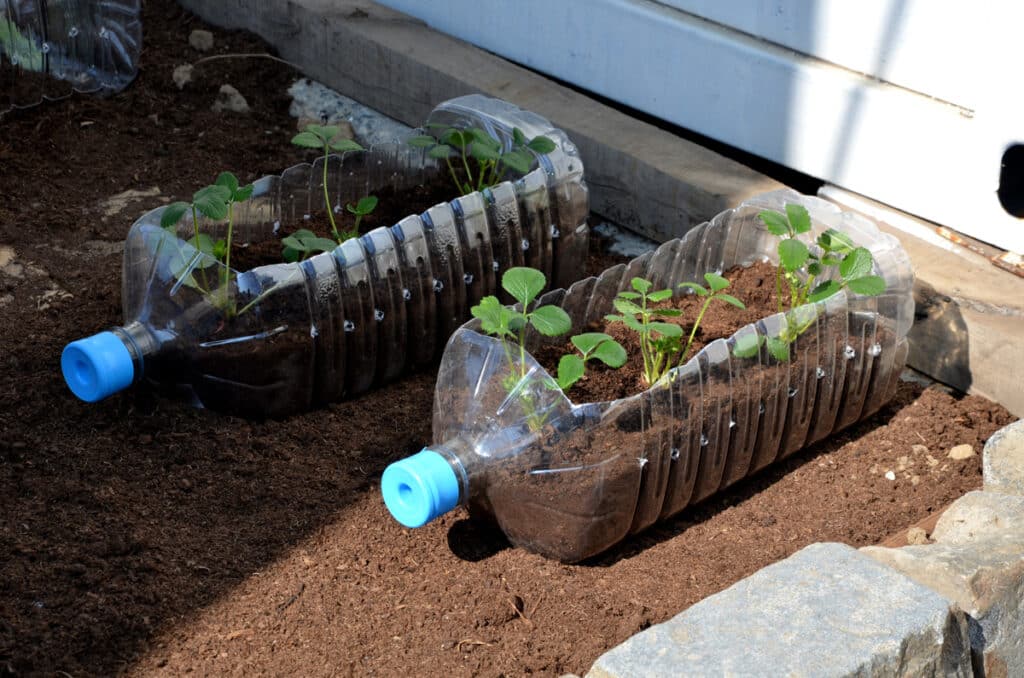
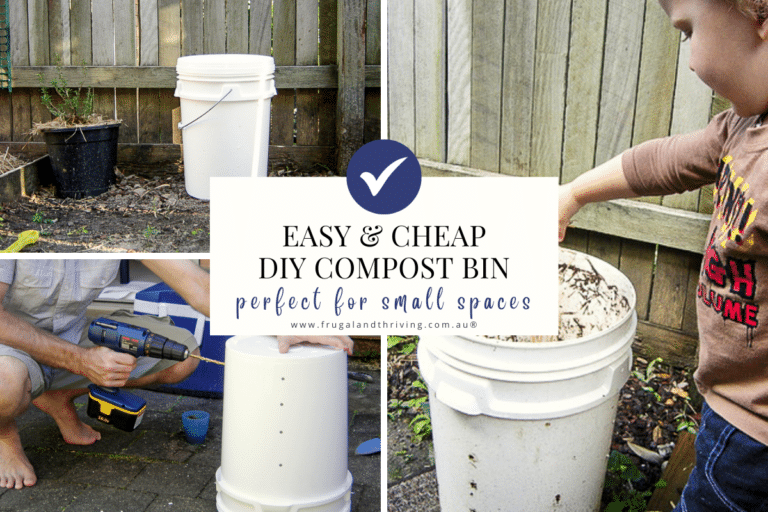
You need to start with a compost bin. We started out with this DIY small compost bin. It’s perfect for speeding up the compost process, and it’s either free or very cheap, which is even better. Gardening does not have to cost a fortune.
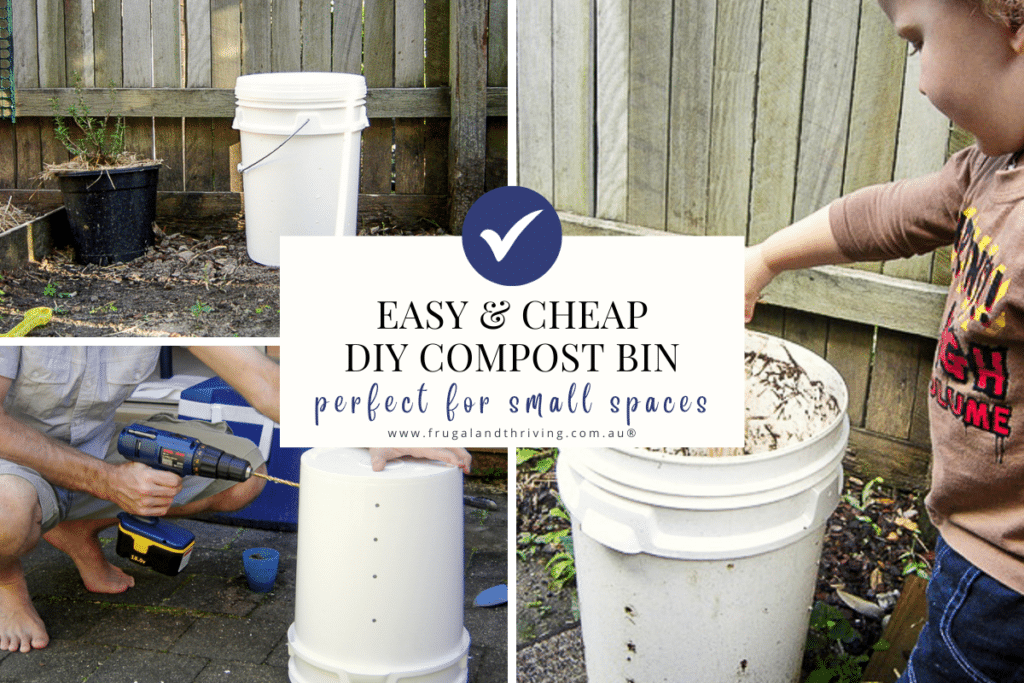
Composting is essentially the decomposition of plants. Friendly bacteria break down the plant structure. To speed the process up, we’re going to help these friendly bacteria do their job by starting the breakdown process for them.
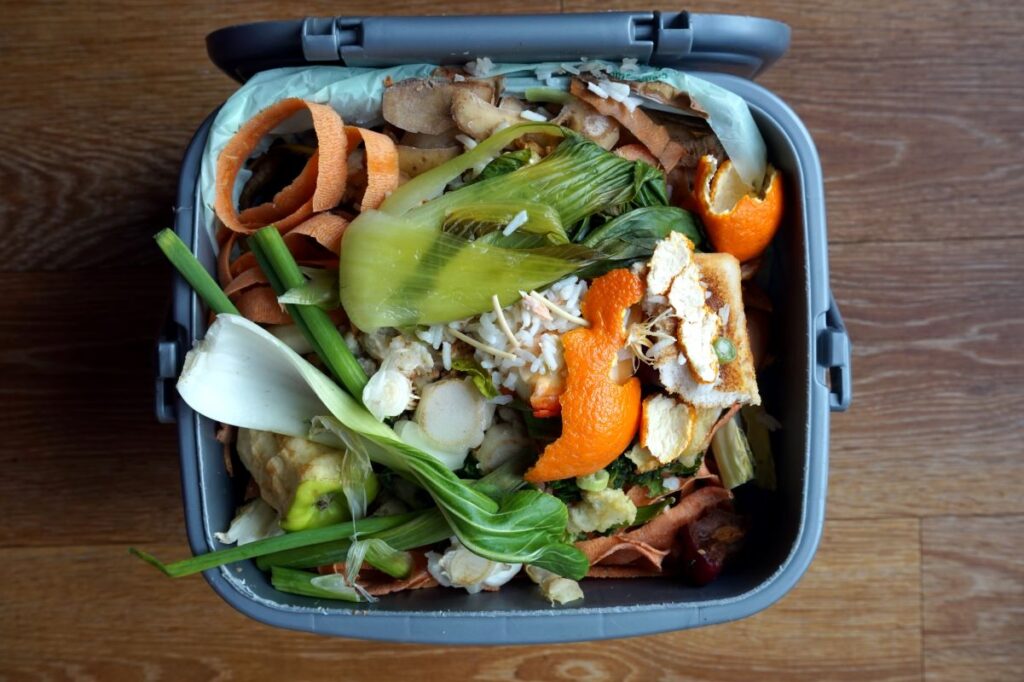
To break down food scraps, chop them finely while you’re preparing your meals or throw them in the food processor to make a fine food-scrap blend.
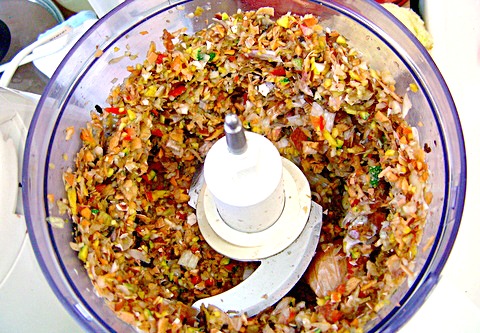
The smell of this concoction is surprisingly good: onion-y, garlic-y, apple-y, capsicum-y good. Passionfruit and pineapple season was a sweetly aromatic time for the compost bin.
(Don’t want to be bothered with finely chopping your scraps? A Bokashi Bin can help speed up the composting process without all the effort.)
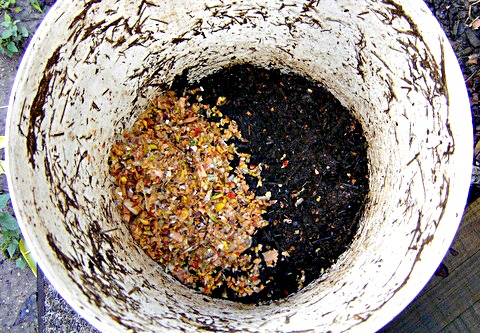
Once your food scraps are processed, add them to your compost bin, along with some finely cut dry matter – I compost our old shredded tax returns and bank statements. It makes composting particularly satisfying.
Compost Balance
For good compost, you need to keep the ratio between the wet ‘nitrogen’ ingredients and the dry ‘carbon’ ingredients right. But this isn’t rocket science.
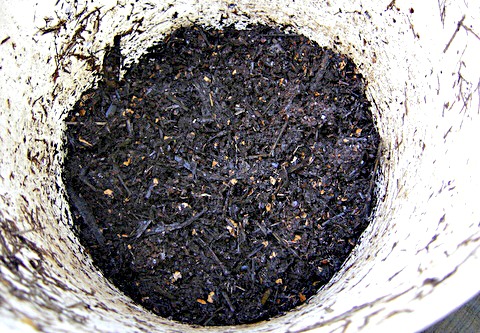
If your compost is moist, but not wet, if it smells sweet and fresh like the damp earth of the rainforest floor, mixed with the natural smell of the kitchen scraps (banana peels are particularly distinct), then you’ve got the ratio spot on.
If your compost stinks, it’s too wet. Add dry matter and give it a stir to correct it. Paper, dry leaves – stuff like that.
If your compost is too dry, you’ll be able to feel it. And nothing will be breaking down. Add more kitchen scraps, green lawn clippings, manure or water.
When your compost is like baby bear’s porridge – just right – it will start to heat up and break down. Heat is the other important factor with compost – microorganisms like warm, moist environments.
Large compost piles generate their own internal heat from the decomposition process. For small bins, you can help the process along by keeping the bin in the sun and keeping the mixture moist.
Aeration
The final step is to aerate your compost regularly. Either give it a good stir when you add your kitchen scraps – a long stick works just fine – or push your bin over and kick it up the yard and back to give it a good roll and tumble. This is one chore the kids love doing!
Add This Key Ingredient For Even Faster Compost
Do you make sauerkraut?
Fermented vegetables – those superfoods that are full of friendly bacteria – have gone through the very first step of composting. The good bacteria are pre-digesting those foods for us. It kind of makes it sound gross when I say it like that, but when my fermentation teacher told us, it made complete sense.
So don’t waste the lacto-fermented juice of your fermented foods – it is full of friendly bacteria which can help inoculate your compost and break it down more quickly.
Just be sure not to overdo it (add just a few tablespoons), as you still need to maintain a balance between dry and wet ingredients. Since brine contains salt, you don’t want to overdo the salt.
Adding lacto-fermented juice isn’t essential, of course; there are plenty of microorganisms around, ready and willing to compost your scraps, but more hands make light work and adding a few extra will speed up the composting process.
You can buy commercial compost accelerators like this one if you prefer, but a little juice from proper sauerkraut (not the supermarket stuff) is a free alternative.
A little bit goes a long way, so just sprinkle it in to give your compost a boost. You need a village of friendly bacteria, not a city full of crime gangs making trouble in your compost bin. If you do add too much, and your compost becomes too wet, add some more dry ingredients.
2025 Update – A Note on Electric Composters
I haven’t tried an electric composter, so I can’t comment on its effectiveness. I read this review on Garden Myths; the writer actually tested one and gave a comprehensive overview of the results. His conclusion: they are good for people who want an alternative to throwing out food waste but can’t compost.
If you’re able to compost the old-fashioned way, it’s more frugal than buying another electricity-run gadget.
Compost Troubleshooting: Quick Fixes for Common Problems
Q: Why does my compost smell bad?
A: It’s probably too wet or has too many food scraps. Add dry materials like shredded paper or cardboard, straw, or dry leaves and give it a good mix.
Q: Nothing is happening — why isn’t my compost breaking down?
A: It might be too dry, too cold, or missing “green” materials. Add more food scraps or grass clippings, and keep it moist like a wrung-out sponge.
Q: Why are there fruit flies or bugs in my compost?
A: Scraps might be exposed. Bury them deeper or cover each new layer with dry material.
Q: I see white mould or fuzzy stuff — is that bad?
A: Not at all! White mould and fungi are part of the natural decomposition process. It means things are working.
Q: What do I do if my compost is slimy?
A: That’s a moisture issue. Add dry materials (paper, cardboard, dry leaves) and turn the pile well to introduce air.
Q: My compost smells strong and heats up too much. What’s going on?
A: It may be compacted and lacking oxygen. Turn it thoroughly and balance wet/dry inputs.
For more information:
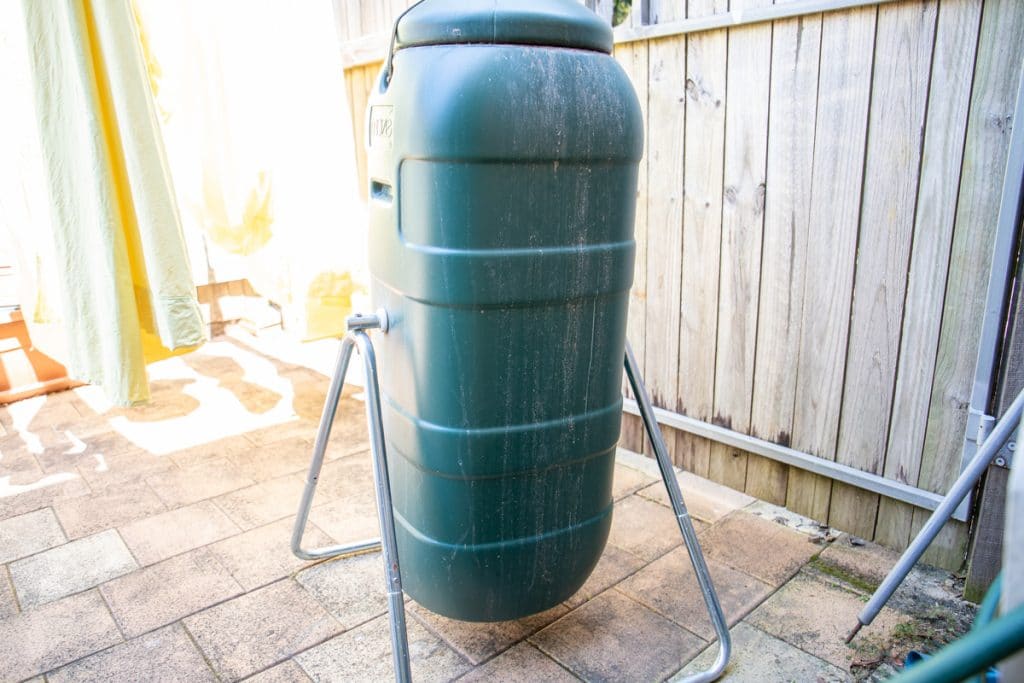
Composting is surprisingly easy with a bit of time and aeration.
Do you make compost? What are your composting tips? Why not share them in the comments below?

Great information Melissa! I have a problem with my main compost bin…with the emptying just at the moment. A little while ago, 3 vigorous and healthy tomato plants, and a pumpkin vine started growing beside the bin while we were away for a fortnight. Previous experience for me is that these self sown beauties crop better most times than the carefully planted ones in the veggie beds. So we can’t open the flaps/doors without damaging the plants…for a little while yet. ?
It will be worth it, it’s a good problem to have :). I agree, self-seeders are always the best :)
This is so helpful as I have a garden so I really need a compost. I tried making but yes it really takes time. I’m not aware that you can speed up its decomposition. I always eat yoghurt so I’d definitely start using it for the compost. Thanks so much, Melissa!