Why Quilting Might Be the Most Frugal Hobby And How to Get Started
This website may earn commissions from purchases made through links in this post. As an Amazon Associate, I earn from qualifying purchases.

Want to try quilting? Here’s why this old-school craft might be the most frugal (and satisfying) hobby and how to get started without spending a fortune.
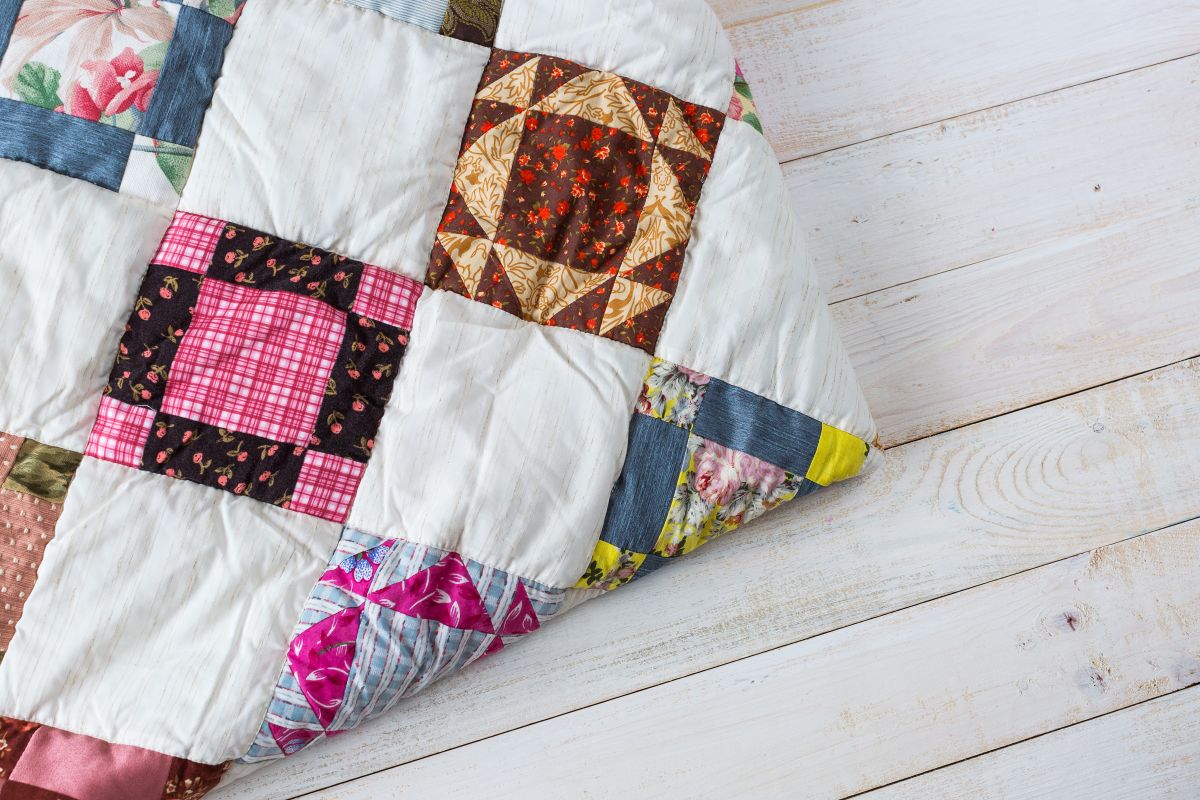
Of all the crafts I’ve tried over the years (and I’ve tried most of them), quilting is still my favourite.
I stumbled into it, thanks to a book club. The main character in the novel we were reading took up quilting, and I was inspired. Then, I was hooked.
(That would have landed better if this was an article about crochet!)
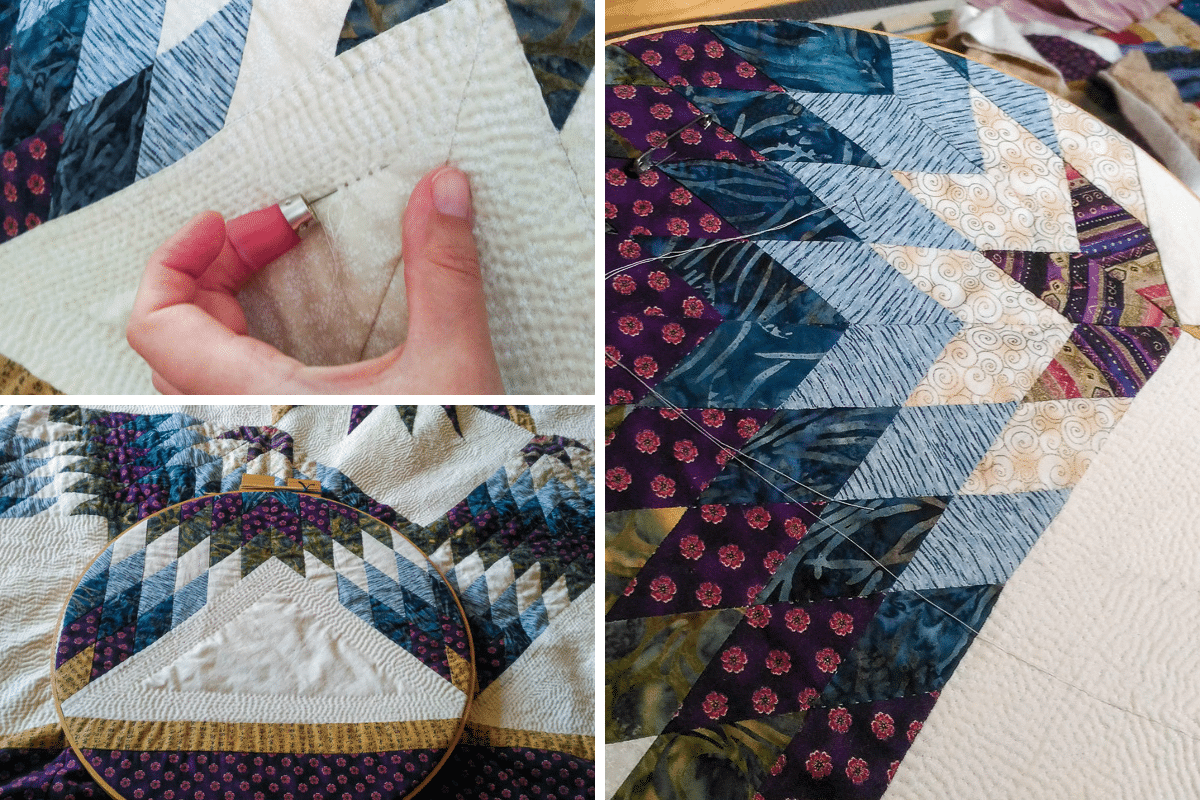
Since then, I’ve both hand-sewn and machine-quilted – my current bedspread was supposed to be a wedding present to myself that I didn’t finish until our 13th wedding anniversary. It is all handsewn – not because hand sewing is ‘better’ but because I love the meditative rhythm of hand stitching to many TV and then Netflix series.
Quilting, like most hobbies, can be expensive. But it doesn’t have to be. In fact, quilting might just be the most frugal hobby out there.
Why Quilting is Secretly the Most Frugal Hobby
Quilting, specifically patchwork, is sewing little pieces of fabric together to make a larger piece.
It’s ALL about using up scraps of material leftover from other projects or salvaged from other items like clothes and old sheets. And the quilting part stitches together layers of fabric for warmth.
Most countries have their own quilting styles and traditions. English paper piecing, Japanese sashiko, and, of course, there are the many American quilting traditions. The first quilted garment was depicted on a carving of an Egyptian pharaoh!
Australia too, has a traditional quilt called the Wagga quilt.
Originally made by men using grain sacks, later by women using sugar bags, flour sacks, wool suit remnants and other bits of old clothing. These quilts weren’t showpieces but practical items made from whatever was on hand.
That’s the spirit of frugal living, isn’t it? Taking what you already have and turning it into something useful, maybe even beautiful.
And quilts carry stories. ‘That floral patch was from Mum’s dress,’ or ‘That stripey bit came from the cot sheet we used when the kids were babies.’ They become memory-keepers as well as something to keep you warm.
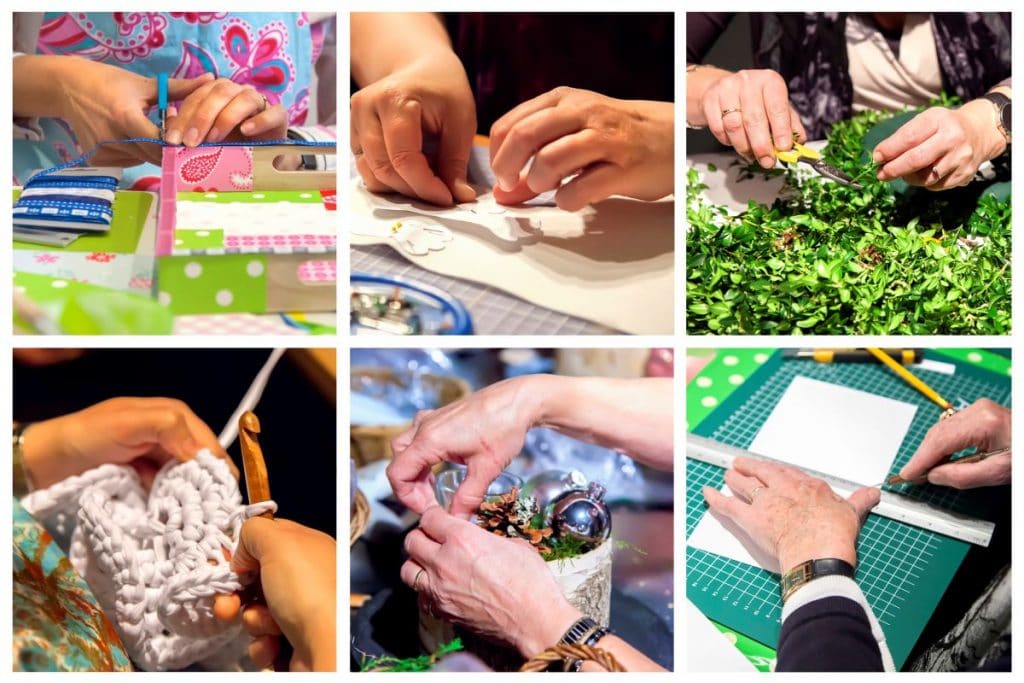
How to Quilt Without Spending a Fortune
Like any hobby, quilting can get expensive. Believe me, I spent my fair share plus some on quilt fabric over the years. Not to mention patterns I’ve picked up at the Australian Quilt Fair that I’ll get to…one day.
But, just like the Wagga tradition, there are a ton of ways to keep the hobby budget-friendly while handmaking one-of-a-kind bedspreads and other furnishings for around your home.
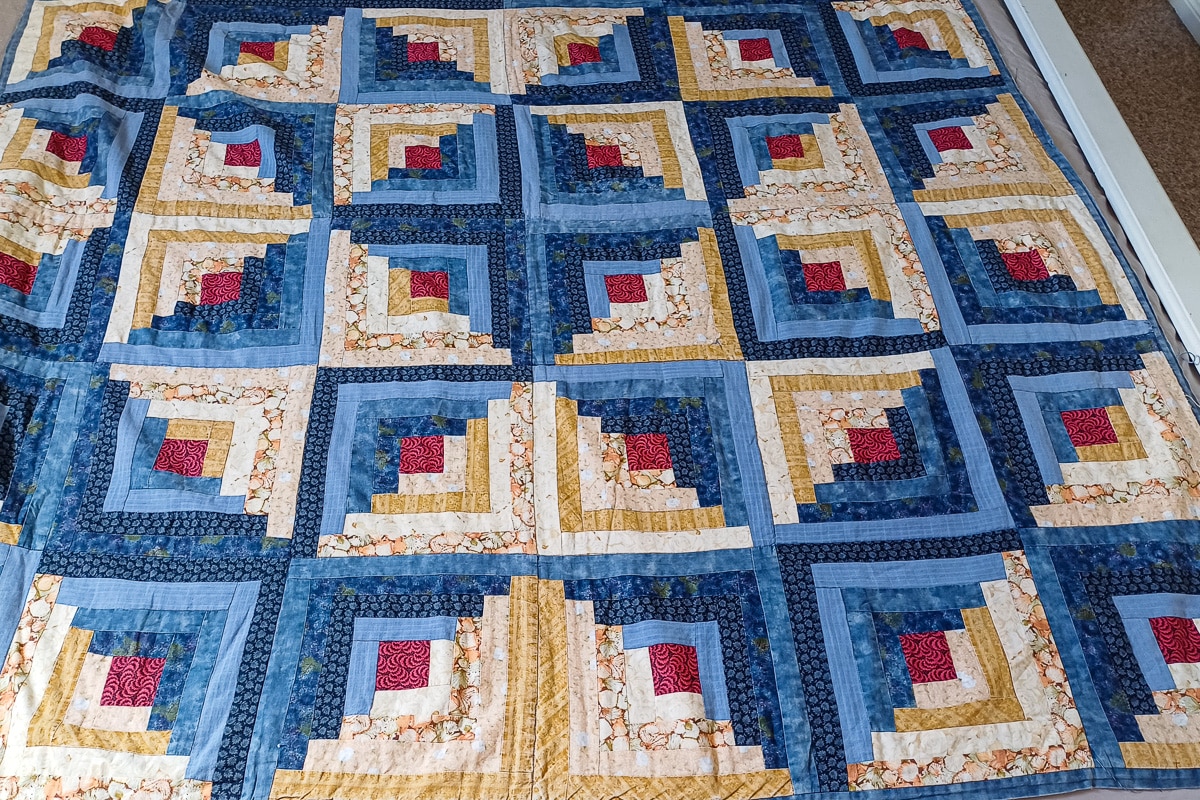
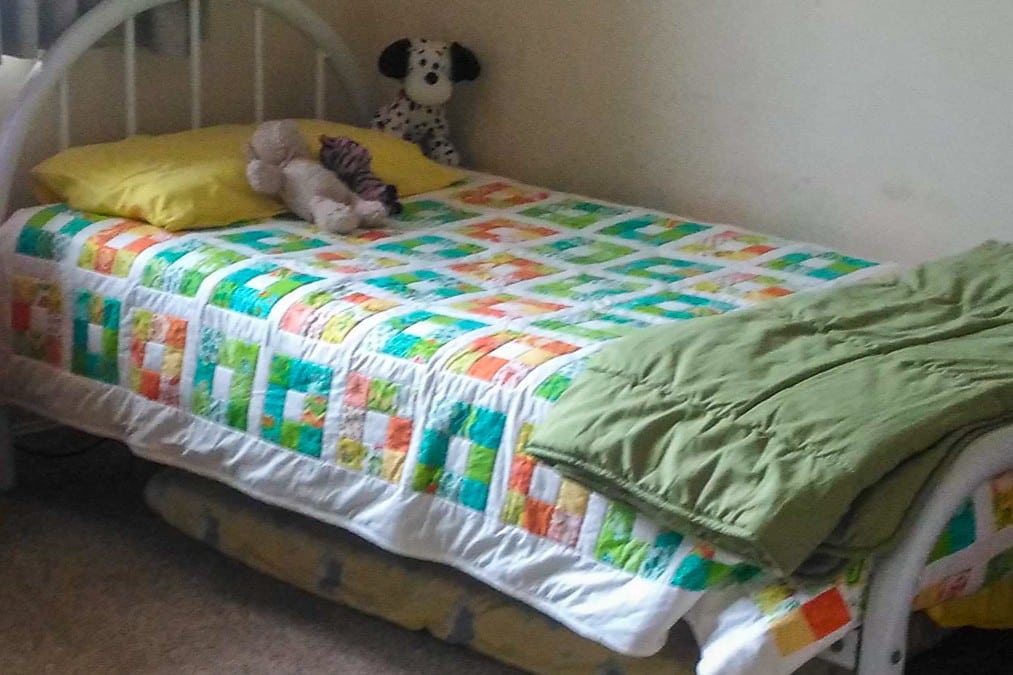
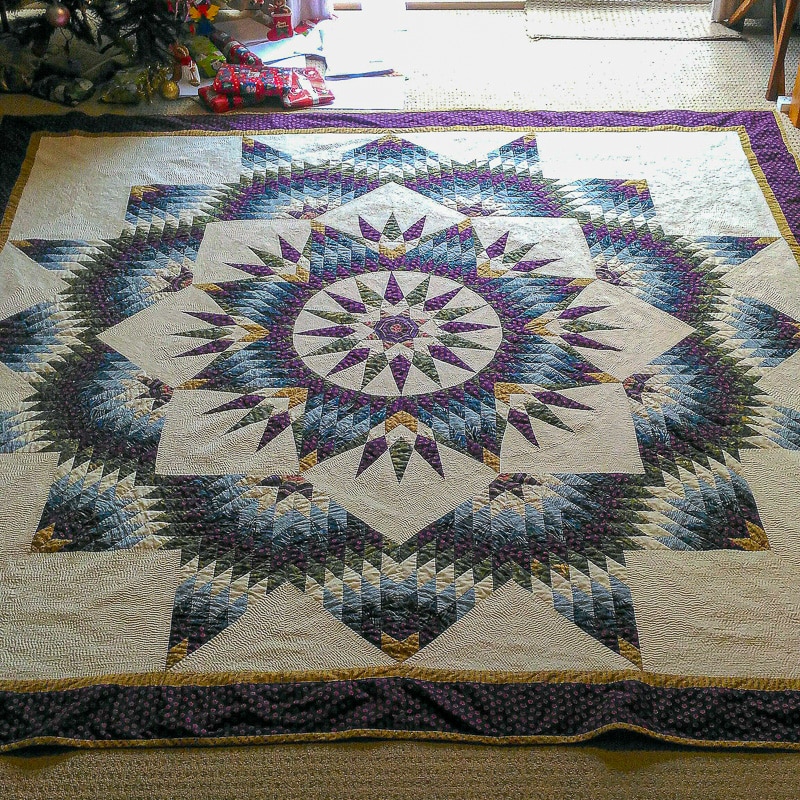
And even if you do buy new fabric, that can often be an investment. I have a throw (pictured above) that I made in 2002. It’s a bit faded, but I still use it on my bed and as a throw on the lounge – that’s over 20 years of use! There’s nothing like the Ikea Effect (we have a preference for what we make ourselves) to give something added value!
Here are some ways to reduce the cost.
1. Recycle Fabrics from Around the Home
Look through your old clothing, sheets, tea towels – anything you’re ready to part with. Cotton works best (it’s easier to sew and holds up well), but I’ve even used satin scraps from a formal dress I made years ago. I lined them for stability, and they turned out fine.
If your fabrics feel too mismatched, try focusing on contrast – light and dark values – rather than colour. That helps everything blend more naturally.
2. Raid Your Local Thrift Store
Thrift stores are brilliant for building a fabric stash on the cheap. Keep an eye out for vintage sheets, fabric remnants, or even worn clothing (cotton is best) that you can cut up. Some stores sell bags of offcuts for just a few dollars.
Offcuts and remnants that other sewers have donated? They’re gold for building your quilting stash (hello Spiderman fabric I picked up for $1 at the Salvos!).
3. Ask for Fabric as a Gift (Or a Gift Card If People Don’t Know What to Get You)
One year, a friend gave me a stack of fat quarters for my birthday, a super thoughtful gift for a quilter. It’s halfway to being a lap quilt now, and I’ve got half a mind to gift it back to her when it’s done. (If I ever finish it, that is.)
4. Use Every Last Scrap
Don’t throw out your leftovers. That’s how some of the most fun quilts come together. Scrap-busting quilts, crazy quilts, strip-pieced quilts… they all embrace the mix-and-match charm of using what you’ve got.
Fabric shops sometimes sell remnant bins cheap, or you could swap scraps with other sewists. Factory outlets can also be a goldmine for fabric offcuts.
5. Quilt Over an Old Blanket
Instead of buying new wadding (the inner batting), try repurposing an old wool blanket or even a worn-out doona. It saves money while making your quilt warm and cosy.
Quilts Make Excellent Beginner Sewing Projects!
Quilts are perfect for novice sewers.
You don’t need a fancy machine, a Pinterest-perfect craft room, or decades of sewing experience to start quilting.
If you can sew a straight-ish line, you can quilt.
You don’t even have to start big.
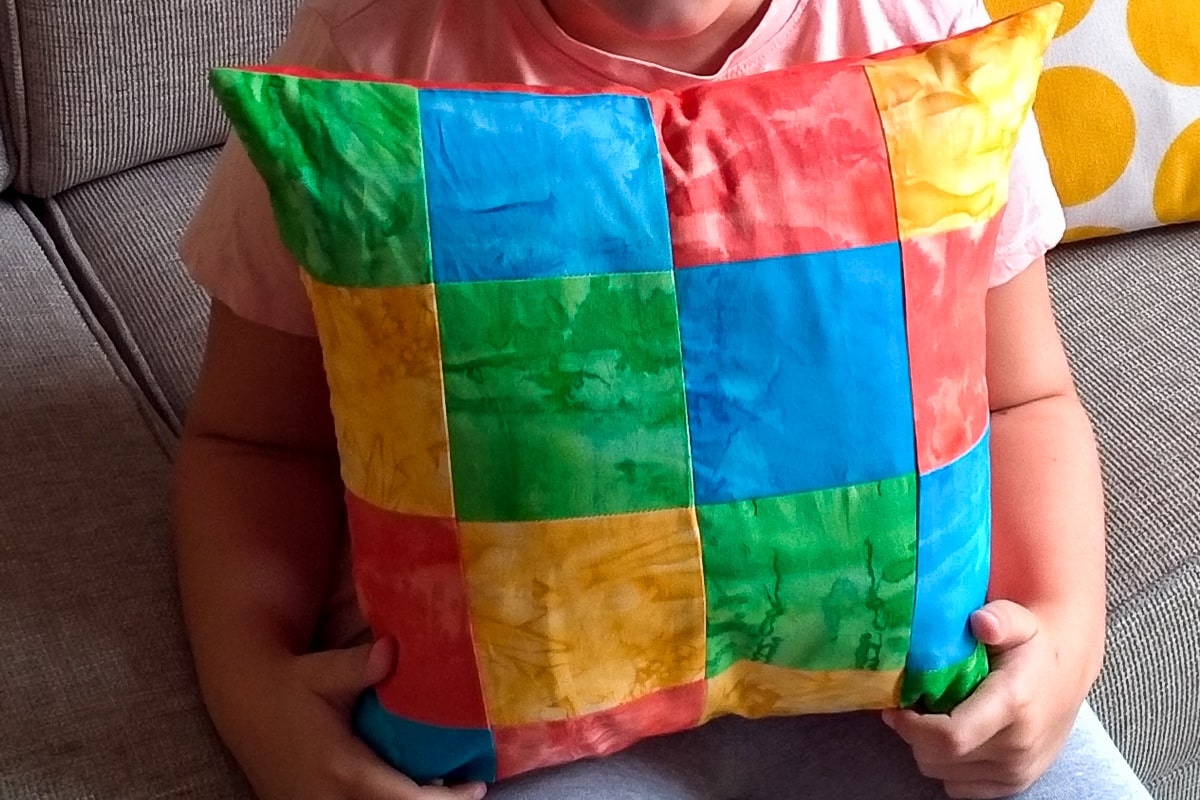
My first project, back in 1999, was a simple block pattern turned into a cushion — the perfect no-pressure intro to the basics.
It’s also how I taught my daughter to quilt when she was about 8. She picked her own fabrics, stitched them together in a simple block, and proudly stuffed the cushion once it was done.
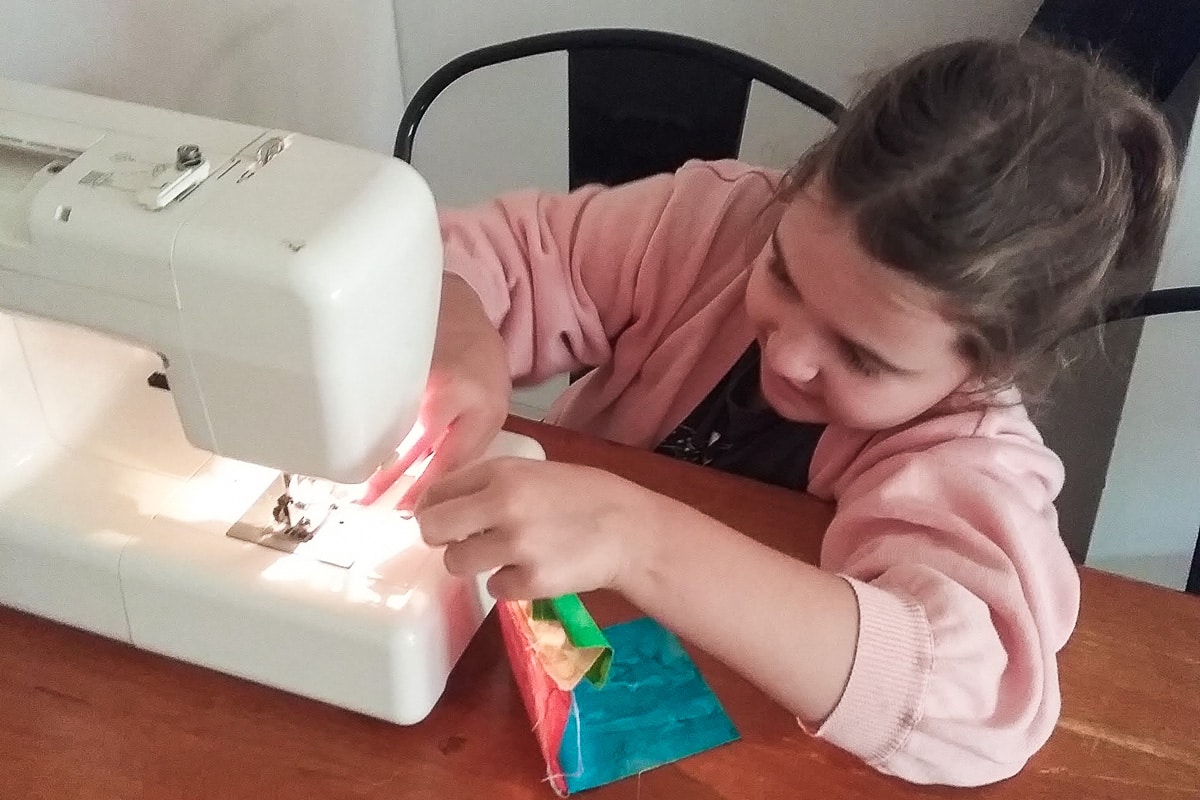
Here’s the funny thing about patchwork quilting: it’s basically cutting up big pieces of fabric… only to sew them back together again to make another big piece of fabric.
And yet, it’s oddly satisfying.
That process teaches you how colours play together, how seams line up (or don’t), and how forgiving sewing can be.
Even better, there’s a tradition from American quilting that says you should never make a perfect quilt because only God makes things perfect. I’m not religious, but I like the sentiment, although I’ve never had to make a mistake on purpose, lol – they just happen.
If you’re keen to try quilting yourself, here’s what I recommend:
🪡Quilting is usually done in inches, not centimetres. It’s one instance where it’s easier (in most cases) to use inches rather than metric.
How to Start Quilting
- Pick a simple block pattern.
Look up something like a 9-patch quilt block or rail fence. These use straight cuts and are easy to sew — perfect for beginners. The Generations website has a block library of over 230 blocks if you want inspiration. - Choose your fabrics
You can start with scraps, op-shop finds, or a small bundle of fat quarters. Stick to cotton if possible — it’s easier to work with. - Cut your pieces
You don’t need a rotary cutter (though it helps). Scissors and a ruler work fine. Try to be as precise as possible, but don’t let perfection stop you. For my wedding quilt, I used simple handmade cardboard templates for the pieces and just traced around them with a regular pen. - Sew the blocks together
Straight seams with a basic stitch. That’s it. If you’re hand sewing, you can use a running stitch (which is the standard stitch) or backstitch, which is what I prefer, just for added strength. Or you can sew using a straight stitch on a sewing machine. Press the seams flat with an iron as you go — it helps everything sit nicely. - Make it into something useful
A cushion cover is a great first project. It’s small, quick, and practical — and it gives you a finished item to be proud of. Other ideas include a lap rug, a table runner, a coaster, a mug rug (big enough for a mug and a snack), or a placemat. All of these small projects are great for using up scraps.
Hand sewing vs. machine sewing?
I’ve done both. Machine sewing gets the job done faster. It’s great if you have an audiobook to listen to while you sew (noise-cancelling headphones are ideal for listening over the sound of the machine).
I started with hand sewing, and it’s my favourite way to make quilts. It’s just me, some thread, and Netflix.
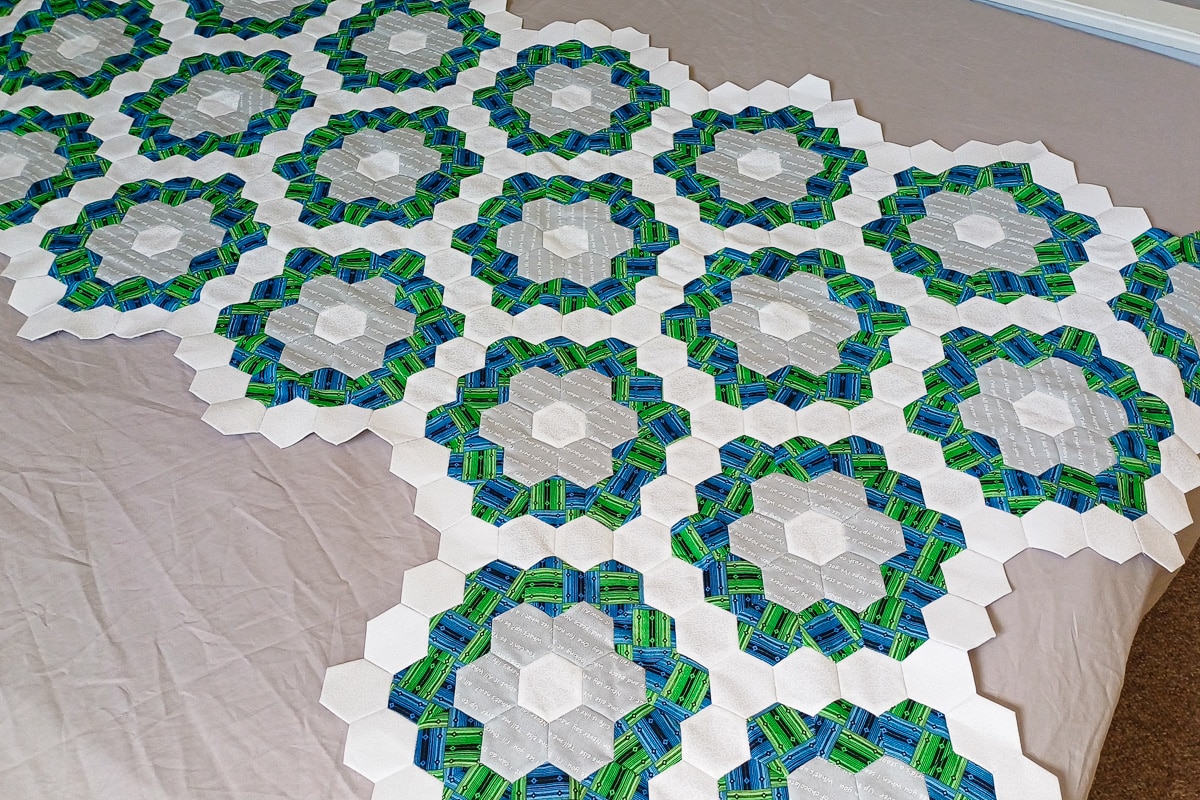
I’m currently making an English paper-pieced hexagon quilt for the first time from fabric I bought in Canberra 20 years ago. It’s finally getting used!
There are heaps of resources on the net and YouTube to help you get started. However, while I wanted to link to some here, I feel like they all overcomplicate what is really a super-easy process.
Cut up fabric, sew it back together.
When I got started, I didn’t have fancy tools like rotary cutters. I had two colours of fabric, scissors, thread, and a needle.
And a book of patterns because this was in the era of dial-up internet, and I had no computer.
I winged it. And made a cushion cover. And you can, too, without the fancy do-dads.
Don’t overthink it — just grab some fabric and start stitching. Imperfect is perfect.
🧵 Beginner Quilting Glossary
Fat Quarter – A quarter-yard of fabric cut into a wide rectangle (typically 18″ x 22″) — great for quilting and stash-building.
Wadding (or Batting) – The soft, fluffy middle layer of a quilt that adds warmth. Can be replaced with an old blanket or doona for a frugal option.
EPP (English Paper Piecing) – A hand-sewing method where fabric is wrapped around paper templates (often hexagons) and stitched together for precision.
Mug Rug – A mini quilt that’s bigger than a coaster, small enough for a mug and a biscuit — a fun, quick scrap-busting project.
Block – A single unit of a quilt pattern. Quilts are often made by repeating the same block design across the quilt top.
A Hobby That Pays You Back in Comfort and Connection
When you tally up the hours spent quilting — especially by hand — it looks like a big investment in time and money.
But the returns?
Comfort, calm, creativity, usefulness, and something warm to show for your efforts.
I’m making an English paper pieced quilt right now to give my hands something to do other than doom-scrolling. I realised I was addicted to social media and a ridiculous matching game, so I deleted everything off my phone but still needed something to fiddle with when my mind spirals.
This is why I like hand sewing so much. It’s productive fidgeting and helps me avoid doom scrolling.
Some of my quilts are unfinished. Some are wonky. Some are treasured.
They’ve wrapped my kids during winter, doubled as picnic rugs, and added a bit of homemade softness to our home.
You don’t have to be “crafty.” You don’t have to get it perfect.
You just have to start with one stitch.
In my case, one stitch at a time saves my mind!
Quilting is great for passing the time, learning a new hobby, and creating soft furnishings for your home and as gifts.
Do you quilt — or have a quilt made by someone you love? I’d love to hear your story.
And if you’re thinking of giving it a go, I hope this gave you the nudge you needed.
You can absolutely do this — and you don’t need to spend a fortune.

This comment was emailed:
I have been reading about quilting on your blog.
I have another tried and true suggestion for quilt wadding. It happened this way, I had just completed piecing the top for a Christmas present quilt for my Mum when I realised the beautiful wool wadding wouldn’t stay beautiful for long in the commercial washers and dryers at her nursing home.
I looked around my family room and noticed the ratty looking pieces of polar fleece my 3 year old grandson loved cuddling, hiding under and playing with. I knew something like that would survive the rough handling so I looked in my linen closet and found some more pieces, not new but not worn out either, just looking a little sad. Now in the middle of my Mums quilt they are now contributing members of the family and no longer sad.
My Mum has since passed on and the quilt is now back in my home. It is still light and warm and nobody any the wiser about what I used for wadding. Polar fleece also works well for Grandkids quilts because there is no special care required by working Mums to launder them, just chuck it in the washer and it comes out beautiful.