How I Budget Irregular Income to Smooth Out the Ups and Downs
This website may earn commissions from purchases made through links in this post. As an Amazon Associate, I earn from qualifying purchases.
The feast-and-famine of living on irregular income can be stressful. Here’s how I budget irregular income and remove some of the stress.

Irregular income can be a bit feast or famine, whether you’re a freelancer like me, you own your own business, or you’re a casual employee.
Some months are good, and you feel on top of the world, and others leave you feeling like you’re barely holding on by the fingernails.
I get paid monthly, quite often late, and that last week of the month can stretch into the first week and even the second of next month. Yeah, not fun. Not to mention the lack of sick pay, holiday leave, or super that you have to save up for on top of living expenses.
Throw AI into the mix, and I’m not going to lie, in slow months, I find myself wondering if this is the end of the line for me as a freelance writer.
In the meantime, I thought I’d share what I do to smooth the peaks and troughs of the gig economy, and how I budget irregular income. These are some of the strategies I learned, back when I was an accountant, for managing cash flow and creating income and expense buffers.
You might also like the articles on how I make a super simple budget.
Disclaimer: This is general information only. In this blog, I share my personal savings and budget stories and what works for us. You should always consult a qualified financial expert when making money decisions (not a random stranger on the internet like me – or even your mate at the pub).
Cash Flow Budget
I like to keep on top of when income comes in and when expenses, especially larger expenses like insurance, are due to be paid. That way, I can plan ahead, save up, and there are no (well, fewer) surprises.
A cash flow budget tracks all the money you receive (flows in) and all the money you have to pay (flows out). It also tracks when the money flows in and out.
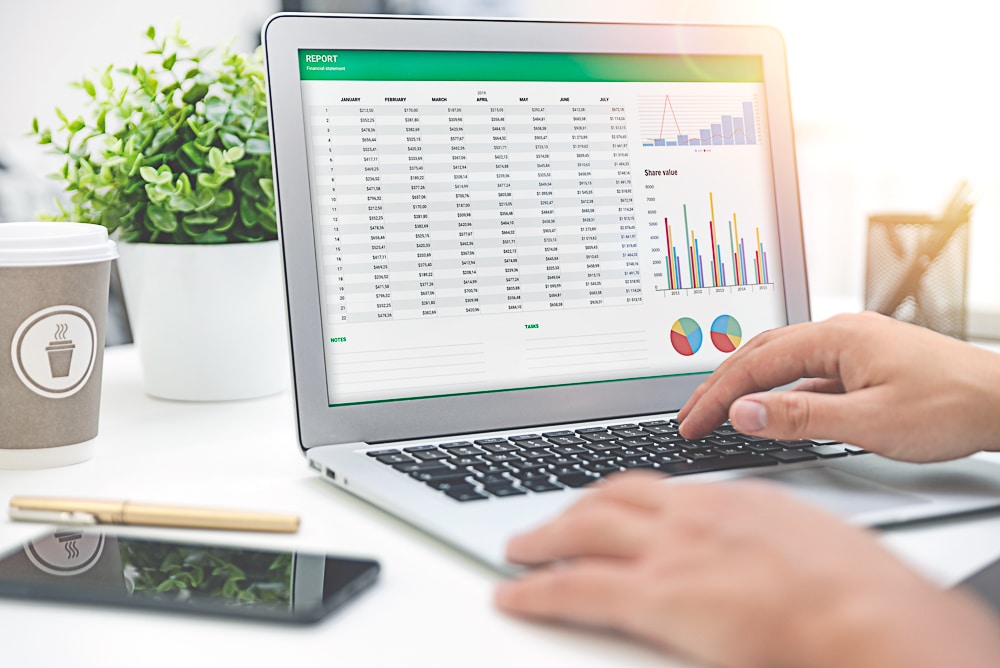
In the article linked to below, I go through how I create a yearly cash flow budget in Excel (also works in Google Sheets). For irregular expenses, I highlight the month(s) they are due to be paid. For example, if I pay car rego every September, I highlight the cell in light blue for rego. Why blue? Because it’s pretty, and why not make spreadsheets more fun?
Calculate The Break-Even Point
As well as knowing expenses and income, I calculate my break-even point – the amount of money I need to earn each month to cover all my expenses.
This is my magic number, when I can breathe a sigh of relief knowing next month, at least, is covered.
So, instead of starting my budget with income, I start by calculating my living expenses, including debt repayments, emergency savings, and any extras.
This gives me an idea of how much I need to earn over the year.
I’ve kept a budget for over twenty years now, so I have a fair idea of our expenses. But it pays to do this exercise once or twice a year because insurance goes up, or one of the kids takes up underwater trumpet playing.
If I were starting from scratch, I’d look at my bank and credit card statements from the past year to get an idea of my spending. I’d also do at least a month of expense tracking to see how much I spend on everyday items.
Then I would put the info into a cash flow budget, similar to the one I linked to above.
I also prioritise expenses into essentials and discretionary spending. In tight months, I can cut the discretionary expenses as necessary.
(My name is Mel, and it’s been four weeks since my last flat white…)
Bill Smoothing
Bills like rego come once a year, and a big bill can really stuff up your month and budget.
So, I use an envelope-type system to save for expenses each month.
In a nutshell, if my car rego is $700 a year, I put aside $60 each month to avoid the last-minute bill shock.
When I’m working out my monthly break-even amount, I include the $60, along with the monthly amount for all the other bills I need to cover, as well as groceries and other regular expenses. This is called bill smoothing.
The total of all these expenses is what I need to earn each month to cover the bills. Even though I don’t get paid the same amount each month, I know what the average amount I need is.
The most important step is that I put that money aside every month and don’t touch it.
It can take a few months for bill smoothing to get going, while you build up some savings and ‘catch up’ on bills that you don’t have a whole year to save up for.
For more information, check out my article:

What if you run a business and have business expenses to manage, too? I draw ‘income’ after business expenses and taxes are first deducted.
I Pay Myself Like I’m My Own Employee
Once I’ve worked out my expenses, bill smoothing, and how much I need to earn each month to break even (I know that sounds like a lot, but once it’s done, it’s easy to maintain), I now focus on the income side of the cash flow.
In a nutshell, I have a separate account where all my earnings get paid into (let’s call it account A), and I withdraw the break-even amount each month from this account.
This process is called income smoothing.
So, all my income goes into account A. (If you’re a business or self-employed, it’s a good idea to have a separate business account, which would be your account A.)
Then I draw a regular ‘wage’ from account A into my personal account, turning my irregular income into regular income. It’s not a formal payroll wage, but regular drawings that provide me with a more steady source of income. This ‘wage’ is basically the break-even amount I’ve calculated from my expenses budget.
If you’re a casual employee, not self-employed, you can use the same principle by using a separate account for your income (account A) and withdrawing a regular amount to cover monthly expenses.
Buffer Account or ‘Slush Fund’ for the Lean Months?
The glaring hole in this plan is this: what if I don’t have enough money in account A to take a regular ‘wage’?
This is where a buffer or slush fund comes in. Similar to an emergency fund, a buffer account is where I set aside money to cover income shortfalls in the lean months. Yep, I have an emergency fund and a buffer fund.
Is this mental accounting gymnastics overkill? Maybe. But it helps me sleep at night, and that’s what it’s all about.
So, in feast months, where I earn more than my break-even, I sock a little money aside for the famine months.
While I could keep this in account A, I put it in a high-interest savings account, because why not earn an extra 32 cents, right?
It sounds easy, but it isn’t always, especially when I have several unexpected lean months in a row. Often, I’m balancing what’s left in my buffer with cutting expenses. So, sometimes size really does matter – the bigger the buffer, the better!
Am I Earning Enough Overall?
If some months are low, and some are high, and some months come with big bills, how do I know I’m earning enough to cover all my expenses across the year?
I calculate the total expected expenses for the year, as well as the total estimated income. If my total yearly income is the same or higher, I’m sweet.
I keep a record of what I’ve earned each month for the past five years. This shows me my income patterns: which months are busy, which are slow, and whether I’m earning enough over the course of a full year.
(It doesn’t, however, predict industry shifts like AI, inflation, pandemics, war…)
Earning irregular income can be stressful. Things that help me reduce the stress (besides Chardonnay) include:
- Sharing expenses with a partner who has a regular wage or salary (this helps stabilise our household budget.
- Supplement with a part-time or casual job that offers a bit more stability (I’m looking at you, Indeed…daily, actually, at the moment).
The other side of the equation is always expenses. When the lean months drag on, that’s where I end up, calculator in hand, working out what can go.
It can be a lot harder to plan and budget with an irregular income, especially when lean months drag on longer than expected. These are the strategies I put in place to help even out the peaks and troughs and get a little more predictability in my budget.