10 Frugal Skills to Learn to Save Money and Live the Good Life
This website may earn commissions from purchases made through links in this post. As an Amazon Associate, I earn from qualifying purchases.
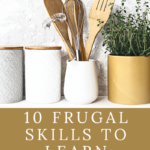
Cultivating these ten frugal skills can help you save money and lead a richer life without a lot of money.
Waste neither time nor money, but make the best use of both. Without industry and frugality, nothing will do, and with them everything.” ~ Benjamin Franklin
You can do a lot with money.
In fact, you can outsource almost your entire life.
You can get someone else to cook for you, clean for you, to do just about anything for you.
But if you’re one of us mere mortals who don’t have unlimited funds, then saving money on everyday expenses frees up money for things that give us joy.
Here are 10 of the essential skills that can money.
Essential Frugal skills
There are a bazillion skills you could learn, and covering them all would take a whole book.
But the following 10 are general, overarching skills that can help you save money.
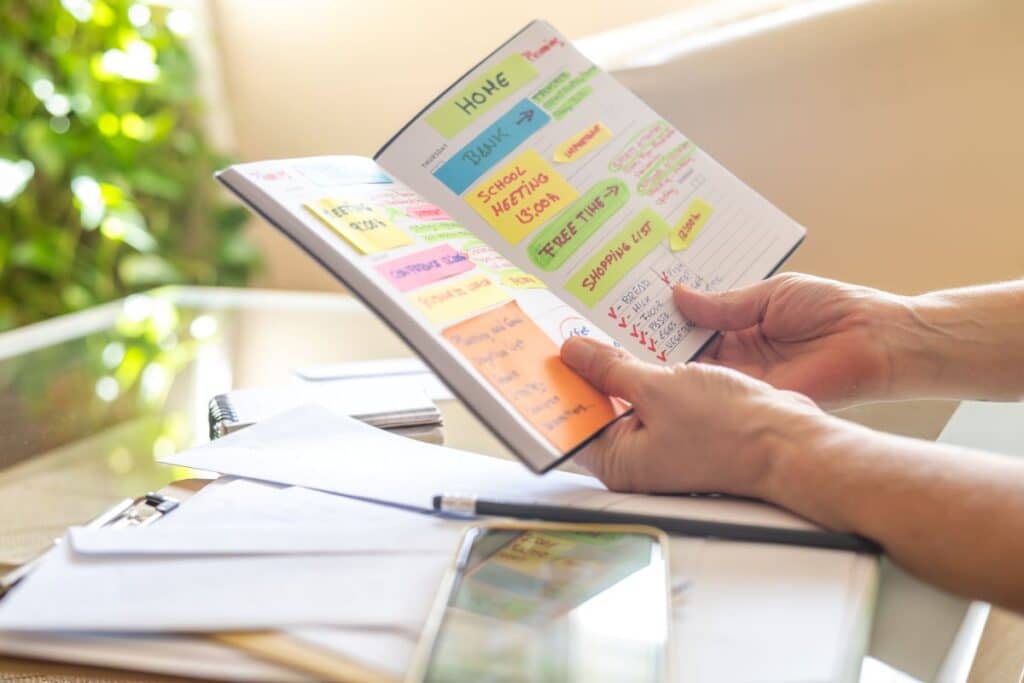
1. Planning and Organisation
It’s not immediately obvious why planning and organisation are frugal skills.
Until you find four half-used stale packets of coriander in the pantry (I’ve done this). Or you get a late fee on a forgotten bill (yep, I’ve done this too).
Being disorganised can cost you time and money, which is why organisation is entwined with frugality.
Budgeting requires you to set goals, organise your finances and save up for things.
To save money on groceries, you need to menu plan.
Saving money on anything requires shopping around in advance and keeping an eye out for sales.
Your home and car need to be maintained regularly to save on costly repairs (which requires being organised).
So taking the time to set up household systems, time management systems and household management systems and other organisational systems saves you time, money and stress.
I was late to the organisation party. I wasn’t taught planning and organisation as a kid, so I’ve had to learn as an adult – often the hard way.
One resource I’ve found super-helpful is the book Smart But Scattered by Peg Dawson. It’s aimed at people with ADHD, but I think anyone can learn something from this book (I did). It doesn’t cover specific organisational skills so much as how our brain works, working out our strengths and weaknesses, and finding ways to work with or around those traits.
2. Money Management
It’s no surprise that managing money is an essential frugal skill.
Good financial management can help keep you or get you out of debt, reduce stress, and help reach your financial goals.
Budgeting is the foundational skill of money management.
There are many other money management skills, and you should definitely speak to a qualified planner or two to get good advice (not off the internet from strangers like me).
But knowing how much income you have coming in, what your expenses are, how much it all adds up to, and how much you can save/are saving is a good start.
3. Creative Thinking
It’s easier to go out and buy something to fill a need or solve a problem.
But it’s usually cheaper and definitely much more satisfying to reimagine a frugal alternative.
Reclaiming, reusing, recycling and repurposing is an art form that saves you money, and it’s a whole heap of fun.
Pinterest is a great place for repurposing inspiration, and you can check out my repurposing board here.
The trick to repurposing is to look at your problem creatively from the following angles:
- How can I solve this problem with the stuff I have?
- How can I reuse this instead of throwing it away?
- How can I get by with the tools I have?
- Can I borrow tools instead of buying something I only need to use once?
4. Cooking at Home
Groceries are often the biggest household expense after house and car payments. This is why saving money here really pays off (and it’s a little more flexible than house and car payments).
You can make HUGE savings on your grocery budget by cooking fresh food from scratch (if you don’t already). Cooking from scratch is heaps cheaper than takeaway.
Not only that but being able to cook wholefood food from scratch is also essential for a healthy, happy life.
Check out the recipe section of this blog for frugal meal ideas.
While we’re on the subject of cooking, there’s a related frugal skill that will also save you money, and that’s preserving.
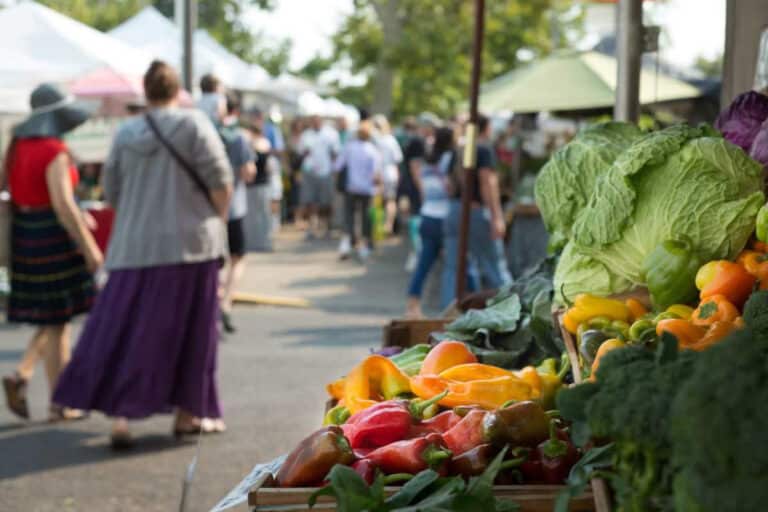
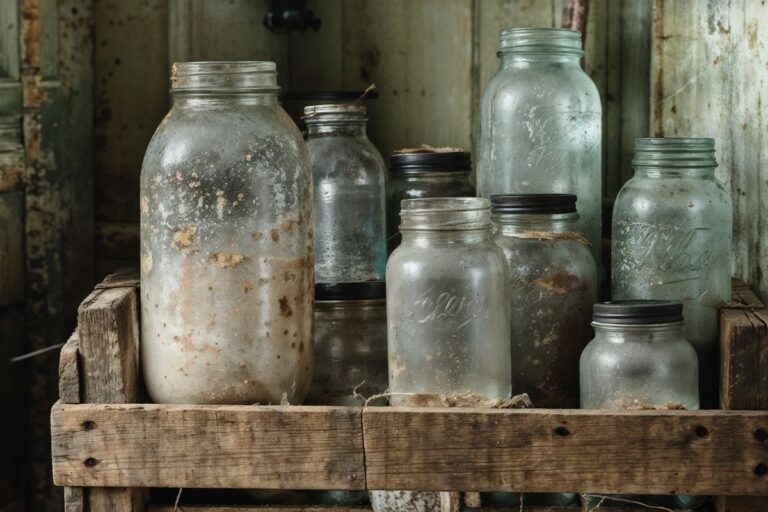
Preserving produce when it’s in season and cheap will save you money, regardless of whether you grow what you’re preserving or buy it. And it doesn’t have to be hard. It can be as simple as freezing fruit and vegetables or making simple jams and chutneys.
You might also like:
5. Savvy Shopping
You’ve worked hard to earn your money. Now you want to be as savvy as you can when spending it.
Shopping is a skill. I have a couple of friends who are ninja-good at shopping. One friend can find amazing bargains at the second-hand store. The other is the queen of discounts and vouchers. I’ve watched her buy a top for $10 that normally retails for over $100.
Ways to shop smart include:
- Shopping second-hand
- Comparing prices
- Shopping the sales
- Haggling
6. DIY
The other day I spent $90 on the plumber.
He changed a single tap washer.
In our defence, we tried and couldn’t do it ourselves. The darn thing was stuck. Even the plumber had trouble, and there was a whole lot of swearing coming from our shower stall before he emerged triumphant.
I would have preferred to keep the $90 in my pocket, not his.
Sometimes it’s just smarter to outsource than DIY. Electrical work should definitely be handled by a qualified pro.
However, the more skills you learn, the less you have to rely on others to do it for you and pay a premium for it.
It cost us far less to paint our walls or make our curtains, for example. And when we can, we change our own tap washers.
When it comes to DIY, it doesn’t just cover home maintenance and renovations.
You can DIY your own gifts, make your own cleaners, make your own soap, or make your own condiments.
7. Sewing and Other Handicrafts
Do you throw out a shirt just because it has lost a button? Or it has a small tear? Or do you give away a pair of pants because the hem is a bit too long?
You may never want to ever make your own clothes from scratch (it’s certainly not my strength), but being able to mend them will save you money. Being able to make adjustments to store-bought clothes will save you even more.
Not to mention how much textiles we’ll keep out of landfill.
If you want to get even more crafty, you can save money on household items and make gifts for people, which can save you money.
I mention sewing because it’s what I’m best at, but sewing isn’t the only craft that is useful. Another example is woodwork.
My husband has made several pieces of furniture for our house at a fraction of the cost of buying ready-made furniture.
Other great crafts include knitting, crocheting, painting, card making, jewellery making, quilting, and cake making, just to name a few.
We had a skills night at Scouts where parents taught kids a range of skills. The skills on offer included sewing, cooking (that was me, it was messy!), woodworking, soldering (thanks to one brave dad), coding, photography, and knife sharpening. There are probably a thousand more you could choose from.
Having a range of skills doesn’t just save you money; it makes life more fulfilling. And the crafts you make may even become a source of income as well.
8. Gardening
You can totally be frugal without ever doing a jot of gardening.
You don’t have to move to the country and start a permaculture garden just to be frugal. Apartment dwellers can save a tonne of money, be very frugal and never garden.
But if you have the room, there are a lot of good reasons to sink your hands in the soil.
Growing your own food, even if it’s only a few herbs on a windowsill, can save you money on groceries, and it’s empowering to grow something you eat.
Growing indoor plants is believed to purify the quality of indoor air (although the science is sketchy). Even so, a house full of plants just feels good!
Even having a scattering of petunias in pots around the front door makes a house a home, gets us closer to nature and increases our happiness.
Gardening can be expensive; here’s an article on how to garden for (nearly) free.
9. Maintaining What You Own
Someone (who shall remain nameless for the sake of familial harmony) broke the band on their wristwatch.
‘You can fix that easily enough,” I said.
‘It didn’t cost much. It’s not worth it.’
It’s not worth it.
Four and a half little words that lead to a whole world of landfill and a lot of wasted money too.
The problem isn’t that we love stuff too much. The problem is we don’t love our stuff enough.
(And the sad thing is, they are probably right. It probably isn’t ‘worth it’ money-wise.)
Being able to maintain what you own and fix it rather than replace it (often) saves you money, but it also saves the planet.
Maintenance covers a lot of ground. Here are a few examples:
Around the home
- Change tap washes
- Clear drains
- Clear gutters
- Weeding, pruning, mowing
- Pest control
- Clean carpet and upholstery
- Repair appliances, toys, furniture and other household goods.
- Pet grooming
Car (getting harder to do the more complicated cars become)
- Change oil and oil filter
- Change spark plugs
- Change tires
- Wash and wax
- Change wiper blades
Self
- Cut hair
- Facials, manicures, waxing etc.
- Exercise
- Eat healthily
- Entertain yourself
10. Bartering
Skill swapping or good old-fashioned bartering can fill a skill deficit without having to fork out a heap of money for a service.
My neighbour and I barter stuff. To be honest, I would just lend her what she needs, but she prefers to barter – it makes her feel less indebted, so it’s a win-win for both of us. My father used to barter zucchinis from his veggie patch and homebrew beer.
You will have many skills or ‘things’ that you can use as currency. Think of the retired lady who advertised to wash and iron clothes in exchange for electrical work. Or the person who lends tools in exchange for some babysitting.
You can find local bartering groups on Facebook and Gumtree or Google bartering websites to see if you can get what you need without paying money. Sometimes just offering an exchange on a local Facebook group also works.
Bonus Skill – People Skills and Building Community
This is a bit of a schtick of mine, so bear with me. Of course, you can skip, but if you’ve come this far… :)
A lot of frugal writing comes out of the backwaters, where self-sufficiency is glorified and preparing for the future means buying a tonne of guns. (I’d give an eye-roll, except too many innocent people die because of this bloody ignorant attitude.)
The reality is that humans are a cooperative species. We thrive in communities when we come together. Nothing that we’ve achieved would have been possible without social cooperation.
Which is why people skills are soooo important. And I worry we’re losing them.
(Also, my people skills aren’t great, so it’s something I’m constantly aware of and working on).
Building community, helping people, allowing people to help you in turn, saying hello to your neighbour or people in the street – all of these things can help insulate us from hardship, not to mention loneliness.
Ok, my two cents over.
Having a host of frugal skills not only saves you money, it means you’re more independent. That’s good for your pride and good for the soul.




have been really enjoying your articles today as I am really relying on my wits to get me through at the moment and trying to distract myself from going to the shops for something to do…of course i write this from the library
Hi Mary Jary, nice to hear from you. I love the library! My one weakness is books, I love that I can get them for free!
Loving your articles! 2015 was the year where we started budgeting, really knuckling down on getting out of debt and breaking old habits. 2016 is going to be our most frugal year, so that we can buy a bigger house in 2017 (our family has grown from 4 to 5 members, and our tiny 2.5 bedroom house is bursting at the seams)!
I really appreciate your helpful and down-to-earth tips. So thank you! :)
Hi Belinda,
Thank you. Sounds like 2015 was a successful year – congratulations. Good luck with your goals for this year and the next – I’m sure you’ll get there, you sound like you’ve got a great attitude.
Thanks Mel. Very helpful tips and great website.
You’re welcome :)
You have hit the nail on the head again Mel.
Think long term I am in the process of replacing things I use a lot with things that I won’t have to replace again.It will save money in the long run.
In the kitchen I have replaced anything that I can that is plastic and breakable or stainable with stainless steel. Bowls, measuring cups and spoons ,potato peelers etc.
My scissors are all now all sharpenable(steel bladed)(including my pinking shears) and I have a sharpener and know how to use it!
In the home office I have bought a weighted sticky tape dispenser (it doesn”t get lost)and you just buy refills( a lot cheaper) a heavy weight hole punch and metal stapler.
In the non permanent things like linen and towels I try to buy the same plain colours (or those that tone in) . My cleaning cloths are all microfibe I bought a pack of 24 in 4 colours for $12.Each color has a distinct use (bathroom,kitchen,laundry etc. when they become unusable great for garage. Easy to clean and reuse.You can buy a car washing microfibe glove great for most cleaning jobs around the house (damp it even picks up dust )
If you need to know how to do something try you tube! you will get varying ways to do things but it all helps.
Hi Eileen,
Thank you for your great advice! I really appreciate that you share what you do here, it’s very helpful.
Have a great weekend.
Mel
Superb – as always and as usual. Keep us to good writing, Mel!! You are a true gem.
From Dann (well-known budget cheapskate and a long-time lurker) in Melbourne.
Sorry, Mel, I meant “keep UP THE good writing”. Darned spell checker undid me again. Or a senior’s moment, ha…
A small suggestion, if I may. can you do an article for us about common-sense advice on buying a new computer? My now ancient Apple Mac laptop (like its owner) is showing signs of wanting to kick the proverbial bucket, and I for one (of many, I’m sure) would be most appreciative of what you have to say about buying wisely. In this day and age there is so much info out there about computers but a lot of it hits me as being consumer-cash-grab writing anyway.
What do you think about replacing an old computer?? Over to you, my dear lady.
From Dann in Melbourne
thanks for the great information . looking forward to reading more
regards bernie
So well written, so meaningful.
What you wrote here has resonated with me. In this age of despair, it’s good to do what we can, enjoy the small things, that are creative and make us feel that we are somehow apart from the Herd, while still one of the great lot of humanity.
I am late in coming to this article, which you wrote last year, before the horrific events in Bondi Junction and the spate of stabbings and killings that followed, struck fear so deeply into the hearts of many Australians.
Why is it so difficult to think clearly and logically, and apply a little common sense to the decisions that can make our lives so meaningful?
I look forward to more of your writing of this sort. Voices such as yours are so badly needed in our increasingly insane world.
Carry on, dear lady, you have an audience who appreciate and value you…
DANN in Melbourne