The best way to build a Grocery Stockpile on a Budget
This website may earn commissions from purchases made through links in this post.
Save money by building a grocery stockpile that’s easy to manage. It’s easy to build a stockpile on any budget, a little at a time, that suits your family’s tastes and needs.
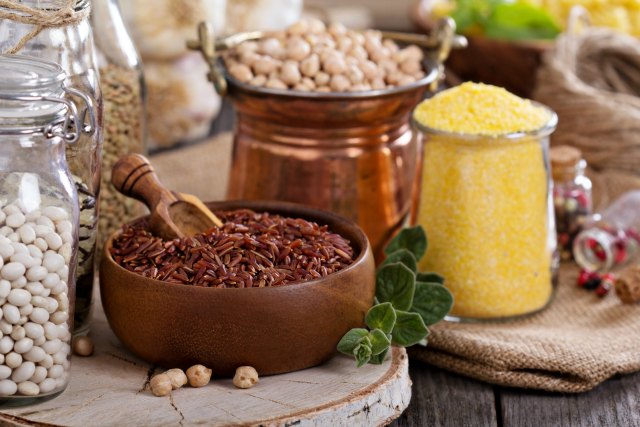
Stockpiling: “The practice of buying what you use, when it’s at its rock-bottom price so when you need it, you have it and you don’t have to pay full price.” [source]
Stockpiling isn’t about preparing for the coming Armageddon.
No bunker required.
Instead, a stockpile is having more than just a few days of food and other groceries on hand.
There are several benefits to stockpiling:
Stocking up on groceries when they are on sale means you never have to pay full price.
Here’s an example:
Just say your favourite dishwashing detergent is $3 a bottle. And that bottle lasts you one month. If it goes on half-price sale every three months, and you buy three, then you save $18 a year.
I know, $18 doesn’t sound like much.
But…
If you do this for all the grocery items on your list, your small savings add up to big savings over the year.
Stockpiling groceries also means you always have food (or, say, toilet paper) on hand if, for any reason – be it illness, tiredness or disaster – you can’t get to the supermarket.
While stockpiling can save you time and money, it can also be a waste of both if you don’t do it right.
This article shares the steps to take to make sure you’ve got a working stockpile that’s right for you.
Step One: Four practical decisions to make to do stockpiling right
A little planning will save you a lot of time and wasted food.
Before you start your stockpile, you need to consider:
1. Where are you going to store your food? How much space do you have?
Do you have a pantry set aside for your stockpile? A second freezer? Your space will dictate what you will stockpile and how much. I don’t stockpile frozen foods, for instance, because we only have a tiny freezer.
If you don’t have a lot of space in the pantry, you can store food in unconventional places. Tinned food can be kept in the closet, under the bed, or in the garage. But…
there are a few things you need to be aware of if you store food in outside the pantry. Be aware of the temperature – don’t store food next to a water heater, for instance. Also, make sure you don’t forget you’ve got food stored in unconventional places like under the bed! (Although this is a great place to store extra toilet paper.)
2. What storage containers do you need?
It’s important to have storage containers for your stockpile to keep pests at bay. So, it’s a good idea to consider what you’re going to stockpile and how much and then make sure you’ve got storage containers before you build a stockpile.
3. How much do you need to stockpile? What are your stockpile needs?
Do you live in a rural area, a long way from a store? Or do you have a large family? Your stockpiling needs will be different to someone who lives alone in a small apartment.
A 20kg bag on sale may seem like a bargain but if you don’t eat rice often, or if you don’t have space, it’s not going to be the right option for you.
You need to be able to eat through your stockpile before use-by dates and before it goes stale. So stock only the amount you are able to eat through in a reasonable time. It’s not a bargain if gets wasted.
Stockpiling isn’t a one-size-fits-all solution. But it is something we can all do to save time and money…as long as we tailor it to our individual circumstances.
4. How does your local climate affect your stockpile?
This isn’t something most stockpiling experts consider, but your local climate will have a big impact on your stockpiling choices.
I live in a tropical climate where food turns mouldy quickly if it’s not stored in the fridge. I learned this the hard way after moving from a cooler climate where I could store potatoes and onions in a cool pantry all year round.
Not anymore!
Do you have unreliable electricity? Depending on where you live, the power can go out during storm season. And sometimes for days at a time. A big freezer, full of food becomes a liability, not a money saver, in these conditions so it’s important to take them into consideration.
Pro tip: if you are stockpiling to prepare for natural disasters, consider stockpiling foods that don’t require a lot of water, like tinned foods. While foods like rice and pasta are cheap and store well, they take a lot of water to cook and if you end up on water rations, you won’t have enough water to prepare them.
Step Two: A Successful Stockpile Begins with a Plan
What should you stockpile?
That depends on what you like to eat as well as the decisions you made in Step One.
Tinned salmon is a great stockpile food, but if you hate salmon…there’s no point stocking it!
Foolproof stockpiling starts with meal planning. And a solid foundation to meal planning is a master list of your favourite meals.
When you have a master list of meals that you regularly cook, it’s easy to decide what to stockpile because your stockpile list will be based on your master meal list.
You know you’ll eat what you buy; no food waste.
And rotating your stockpile will be super easy because you will eat through your stockpile regularly.
So, to make stockpiling easier, write a list of stockpile foods based on your master meal list.
If you’re looking for a step-by-step process to help you create a meal master list that’s tailored to your dietary needs and budget, check out the eBook: Plan Cook Save. As well as taking you through the meal planning process, there’s information about stocking up based on your master list, how to create a restock list (with free printable templates) to help you rotate your stock and make sure you never run out; and – super important for saving money – how to create the easiest price list ever, which will help you stockpile food at rock-bottom prices.
Save Money on the Groceries eBook
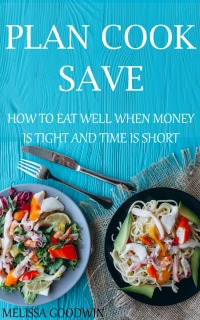
For more ways to meal plan and save money on groceries, check out the eBook Plan Cook Save: How to Eat Well When Money is Tight and Time is Short.
*Learn how to set the right grocery budget for your circumstances.
*Find out the easiest and quickest way to reduce the grocery bill.
*Discover a meal planning strategy that will only take you a couple of minutes a week but will save you hours.
Apart from what’s on your meal master list, other things to consider stockpiling include:
- toiletries, soap, toilet paper
- first aid supplies and medication
- vitamins
- batteries
- pet food
- candles and matches
- cleaning supplies
You might also like to check out: Frugal Pantry Staples.
Step Three: How to Budget for Your Stockpile
Now that you have a list of groceries you want to stock up on it’s time to build your stockpile.
The important thing to remember is:
Slow and steady does it.
You don’t need to build a stockpile in a weekend. A little each week is easier to budget for and easier to manage.
Here’s where your meal plan can come in handy again.
Look at what you’re already buying this week, cross-check it with catalogue specials and then stock up on one or two items on your list.
Give yourself a budget so you don’t go overboard – allow yourself $5 to $20 each shop that’s specifically for adding to your stockpile.
Little by little, without a large upfront outlay, you will have built up a significant grocery stockpile.
What’s more:
You will save a ton of money because everything in your stockpile will be bought on sale. Once you get your stockpile going, you’ll rarely have to pay full price for groceries again.
If you’re super keen on saving money on the groceries, you can check out the catalogues for all of your local supermarkets – you can read them online – and stock up on really great bargains (50% off or more).
No one has time to run around to every store in town to save a few cents here and there. But for items that you normally buy, if they are significantly discounted, then it might be worth popping into a competitor supermarket and stocking up.
If you’re a Cosco member, you can stock up there as well. Use your price list to make sure those bulk buy bargains are actually a bargain.
There are a few things to be wary of when looking for bargains:
- Is the home brand version or Aldi version cheaper than the catalogue special?
- Double-check the price per unit – are other options cheaper, even though it’s on sale?
- Are there markdowns or close to use-by-date items that you can freeze or realistically use before they go bad? These can be great bargains, but calculate the saving yourself compared to the original price and the home brand alternatives.
- Is there a great special on a brand you don’t normally buy? Buy just one first and taste it. If you like it, then stock up. No waste if you decide you don’t like it.
Step Three: Avoid Waste by Storing Your Food Correctly
Buying food in bulk is an investment, and like any investment, you will want to take care of it. That means storing food so it doesn’t spoil, and so pests can’t eat it.
Here are some storage solution ideas:
- Recycled Jars
- Plastic storage containers (look out for when they go ½ price)
- Thrift store containers
It’s tragic when you invest time and money into a pantry store only to have it infested with pests.
(I’ve had to throw out a whole pantry of food infested with pantry moth).
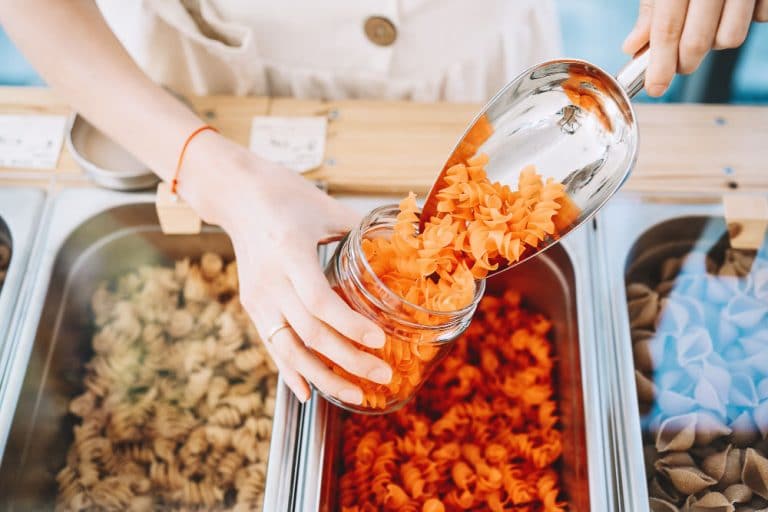
To avoid pests, freeze everything for 24 hours before you store it in the pantry. Rice, flour, nuts, seeds, pasta, cereals…anything that pantry moth or other bugs love. Freezing will kill any eggs and prevent them from hatching.
Then store food in airtight jars and containers to keep pests out. You can also stick bay leaves to the insides of lids and put them around your pantry to deter pests.
Finally, to make storage and stockpile management easier, group like items together in an organised way.
A messy pantry = forgotten food = wastage.
Keeping a list of what is in your stockpile lets you know at a glance what you have on hand. This makes planning meals easier. Keeping a separate list of items that need restocking also makes shopping easier and ensures that you don’t run out.
You might also like this Printable Fruit and Vegetable Storage Chart
Step Four: Eat Your Stockpile Now
The best way to manage your stockpile is to eat your stockpile, and then replenish it as needed (or when there are good bargains).
This prevents food from going past its use-by-date and you don’t need to be “managing” your stockpile so much.
But you still need to give your stockpile a little attention.
How often should you check your stockpile?
The easiest way to manage your stockpile is to check it when you write your meal plan.
Shop from your pantry and base your meal plan on what you have on hand. And shop to replace your pantry. This saves you time, saves you money and prevents wastage.
Step Five: Know When To Stop
It can be hard to turn down a great bargain.
“Half price! I should get some!”
But at some point, you have to stop because you’ll either run out of space or your stockpile will go bad before you can eat through it.
And nothing kills a bargain like wasting it.
I’ve seen stockpilers on TV with 15 jars of mustard. You gotta love mustard to eat all that before it goes bad. My dad would have up to twenty boxes of long-life milk in the linen cupboard – and nowhere to put the sheets.
It’s easy to get addicted and go overboard when the pull of a bargain is too strong, so know when to stop.
It’s a good idea once a year to clean out and eat through your entire stockpile and start again. Discover the forgotten items in the back of the cupboard.
Stockpiling isn’t storing enough food to outlast a nuclear war. It’s about making the most of sale items and having a little more on hand than just a week or two’s worth of food so you don’t run out of stuff and you’re sorted if there’s any reason you can’t make it to the supermarket.
Get the most out of your stockpile by stocking the right foods, storing them correctly and eating it so nothing goes to waste.


Hi, I love your blog :) So many handy tips :)
I was wondering how much do you spend on a weekly basis on your grocery shopping? I spend about $150-$200 for all meals for 2 adults and 2 small children (4 and 2)
We rarely (6 times a year maybe) get takeaway, I bake muffins, make A LOT of things from scratch and buy homebrands where I can, but I do like nice food and some organic here and there. I make my own muesli that lasts 2 months as we only use it as topping, make smoothies for my girls.
I think I’m doing well, but my husband says it’s too much.
What do you think?
Hi Vanessa, nice to meet you :).
We spend around $150 – some weeks more, some weeks less. Our kids are eight and six.
There’s no right and wrong amount to spend. If you like to buy organic, then it will cost more and if that’s important to you, it’s worth it. I’m not sure where you’re from, but Aussie groceries can be expensive, and if you live in a regional centre, it’s often more expensive than the city. Lots of things affect your grocery budget, so it’s important to set a budget that’s right for you.
I think you’re doing amazing!! That’s a lot of work you’re putting in – your family is very lucky!
But the most important thing is how you feel. Your grocery budget will depend on your circumstances. Frugality is about living according to your values and hitting the sweet spot between saving for tomorrow and living for today, and that’s different for everybody.
When it comes to partners and the budget, an idea is to ask him to plan out a week’s worth of meals (let him know about your organic choices and why you make them) and then let him do the grocery shopping. It’s hard to appreciate the work a person puts into running a household until they have a go. It’s a lot of work planning, budgeting, shopping, preparing, cooking, cleaning and all the other stuff that goes into feeding a family, as I know you totally know, right!! It’s a huge mental load! We wake up and start thinking about packing lunchboxes and defrosting dinner and feeding kids breakfast… I asked my husband once, he said never thinks about any of that. ????
Anyway, sorry for the long reply. Shifting mental load is something that’s been on my mind a lot lately lol.
Great advice!!! After you and your spouse do the planning and shopping, if he still thinks it too much. then serve him smaller servings or serve on smaller plates. Maybe that will help. Good luck!!!
Hi Vanessa, $150-$200 a week is my goal for my family of 3! Currently we spend $200-250 a week on groceries AND another $100 a week on restaurant food! I know it’s way too much but that is the way it can be when you haven’t thought through budgeting carefully which we haven’t! We are just starting to try to implement some of these things. In a lot of other ways we are be have always been a frugal family. – driving old cars, living in a small house, buying clothes second hand… but we haven’t put much effort into corralling our food budget until recently! You are doing well I would say!
Hello Melissa!
Thank you for your interesting contribution. You speak from my heart!
Greetings from Sibylle from Germany