How I Use a Modern Digital Envelope System to Make Paying Bills Easier (Cashless)
This website may earn commissions from purchases made through links in this post. As an Amazon Associate, I earn from qualifying purchases.
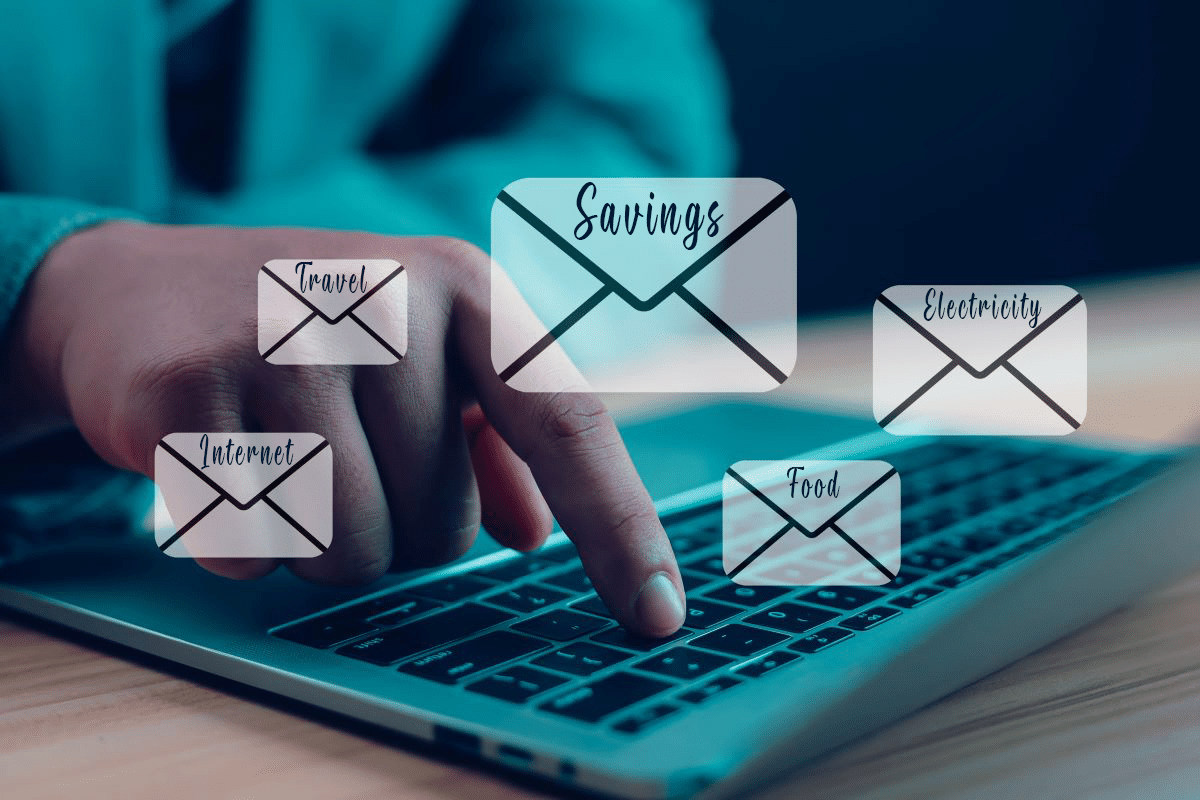
This modern envelope system is a digital twist on an old-fashioned technique (now called cash stuffing) for saving for the bills and other everyday expenses.
The envelope budgeting system has been around for a long time.
Our grandmother’s grandmother used it to take care of the household finances. It’s a time-honoured system because IT WORKS.
Which is why it’s making a comeback, but the next generation calls it ‘cash stuffing’.
Economist have even given it an ‘official’ name: mental accounting, although they tend to be reserved about its benefits.
Here’s the downside…
Modern banking and finance mean that the old cash stashed in envelopes system isn’t always practical.
In a tap and go society, we don’t pay cash for many expenses anymore, especially for bills, which are normally B-Pay paid. It’s a bugger to have to withdraw cash to save for the electricity, only to deposit it back to B-Pay.
Also, having a large amount of cash hanging around the house isn’t very safe.
So I’ve taken the old cash envelope system that I used to use many years ago, and given it an update.
I’ve outlined this modern digital envelope budgeting system that I use below. First, however, I’ll cover an overview of the traditional envelopes system.
Disclaimer: This is general information only. In this blog, I share my personal savings and budget stories and what works for us. You should always consult a qualified financial expert when making money decisions (not a random stranger on the internet like me – or even your mate at the pub).
The Traditional Envelope System AKA Cash Stuffing
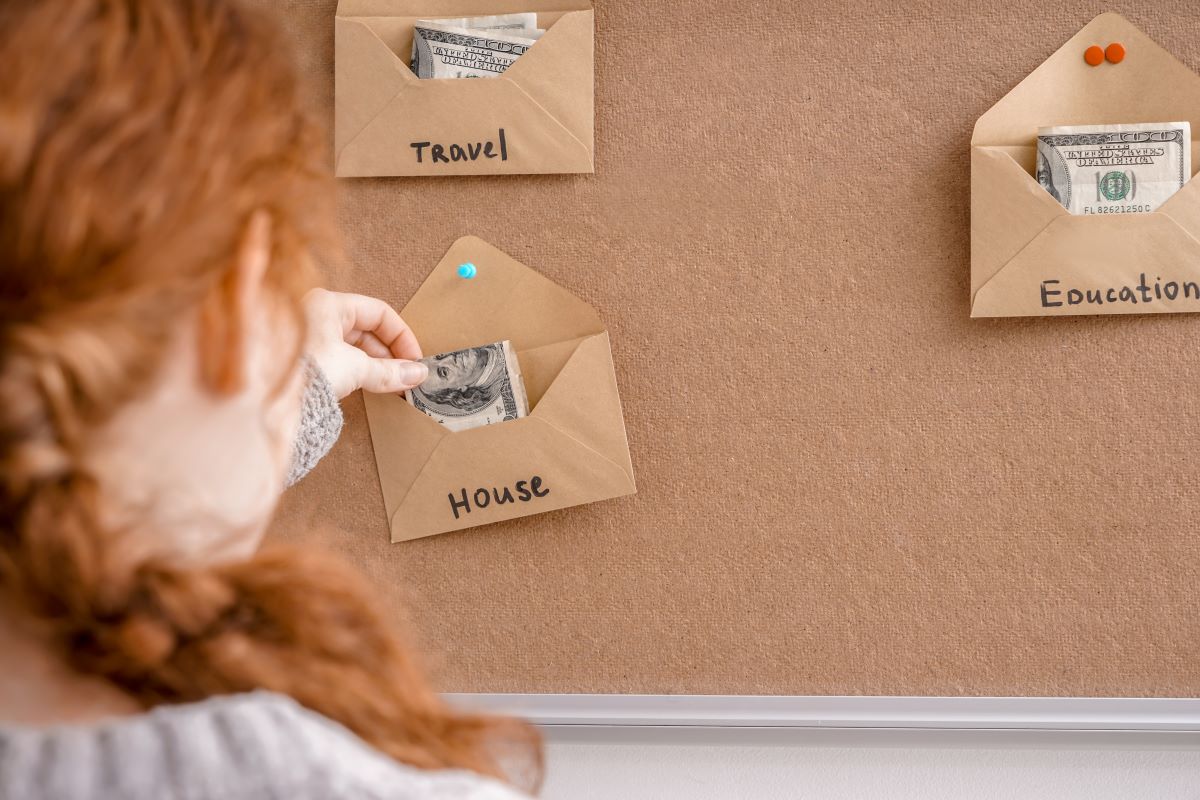
Before we get to the modern envelope system, here’s how the old-fashioned envelope system worked.
Step 1
Every payday, allocate your pay to different expense categories. Work out how much you will need for the groceries, how much for the petrol, how much for the bills etc.
Step 2
Divide your cash and fill your envelopes. Nowadays, they have these super-cute cash binders. Withdraw the amount of cash you need and put it into separate envelopes, one for each expense category.
Bonus! No pesky eftpos fees with cash.
It’s not necessary to have an envelope for everything you spend your money, on just the main categories. For example, you may have an allowance envelope for things like coffee and magazines. You might also have a groceries envelope and a petrol envelope and an electricity envelope.
Step 3
Spend until it’s gone and spend no more. If you spend all the money you have allocated in the first few days, it means you have to make do until your next payday.
Step 4
Put any leftovers into savings. If you have any money left over in any of your envelopes, put this aside into your savings account.
You can, of course, also have a savings envelope, and pay yourself first.
An important aspect of this system is that you are spending CASH. The reality of handing over cold hard cash hurts, so you are more conscious of your spending and less likely to overspend.
My Modern Digital Envelope System
This system is similar in principle, but with a modern, digital twist.
Instead of dividing cash amongst envelopes, I divide it mentally separate categories in a spreadsheet.
You could also use pen and paper, an app, or physically divide the money between multiple bank accounts (some banks allow this without extra fees.
10 Best Money Management Apps for Australians (2024 Update)
Here’s the process I take each payday to virtually cash stuff my spreadsheet.
- I still need a budget for my money and spend within my allocated budget. In my simple budget, I divide up regular bills to work out how much I need to put aside each payday to cover them.
- Pay yourself first. If I can, it’s always best to allocate money for savings first, then any debts, then fixed expenses such as insurance or utilities, then spend what’s left.
- Draw only the cash you need for the week’s allowance money and any other cash expenses like petrol and groceries. Once this is spent, that’s it for the week. I use a prepaid card for this…tap and go, can’t beat the convenience, but I also can’t overdraw it either.
- The amounts that I allocate for expenses goes into a high-interest bank account rather than drawing cash and stashing it into envelopes.
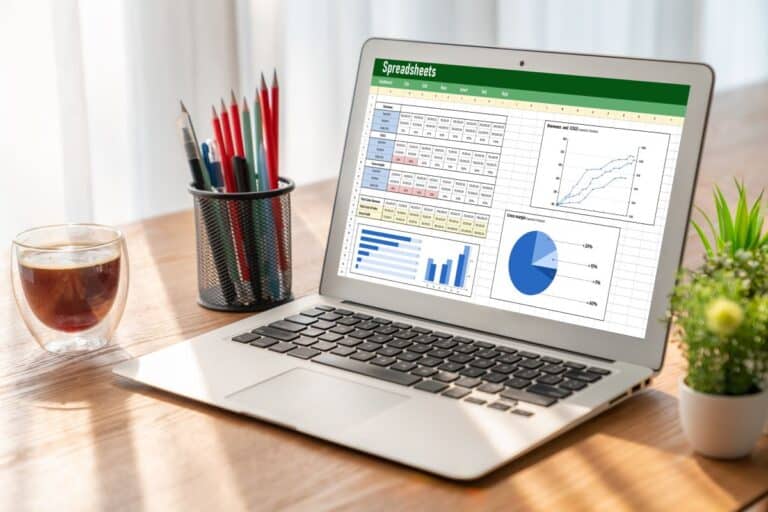
- I keep track of how much I have saved and allocated for each category, by keeping a record of my savings account balance, broken up into your expense categories. I use a spreadsheet (tutorial below), but you can also use an app – Goodbudget is a good free choice for this type of budgeting.
How I Track My Savings Goals With A Savings Tracker in Excel {Tutorial}
When I first started this, I kept an exercise book with a page per expense, and a total page that equalled what I had in the bank.
Now I use a spreadsheet in combination with my budget. I still allocate an amount each fortnight to the electricity account, for example, but it goes into a bank account instead of into an envelope.
Keeping your money in a bank account means you are earning interest and it is still allocated into virtual envelopes.
Take Your Modern Envelope System One Step Further
This is an advanced technique that only works if you’re disciplined with your spending and saving.
We use our credit card to pay for expenses, and then pay it off immediately with the cash we’ve saved.
- When the bills come, I know I can pay them in full because we’ve already saved ‘cash’ and allocated it in our spreadsheet for the bills.
- Rather than using savings, we use your credit card to pay the bills.
- Then we pay off our credit card in full every month with the allocated cash in our high-interest savings account. No interest is paid on the credit card.
This method only works if you have no outstanding debts and you pay your credit card balance off in full every month.
It’s a good way to increase savings interest, keep the money for longer in an offset account against the mortgage, or collect points on a credit card. It can also help you establish or improve a credit history, as long as it is paid off regularly.
The modern envelope system makes paying the bills easier because instead of scrambling to find money to pay the bill when it arrives in the mail, you smooth the bills out by putting a little away for each bill each payday.
That way, you already have the ‘cash’ on hand when the bill does arrive.
Take the stress out bill payment and the money out of the mattress with the modern envelope system.





I know this is an old post, but I do want to thank you for posting it.
I also breaks down my bills into what I need to put away per fortnight into a separate account. Actually, now I think of it, I have been doing that for many years on and off. I am just very slack at using the spreadsheet to work out how much is aside for each bill, it just all sits there together.
I do get frustrated when people push the envelope system. Like you I do not want that cash around the house and I want to pay everything electronically. Once I just asked if there was a better way to keep track of the cash in my purse (grocery, petrol, pocket money) and the advice I kept on getting was to use envelopes, even for my other bills. Right, I really want carry envelopes instead of my purse and I was not asking for advice on bills.
It is great to see someone else advocating using a separate account for bills
Thanks for leaving a comment. I’m glad you like the article. I read the envelope system all the time, cash works for some people – just not me. The separate acccount works for me because I get a bit of extra interest, it’s easier not to spend my ‘bills’ money and who pays cash when you can BPAY :).
Why can’t our everyday saving account be equipped with “envelopes” within them.
So you could send the electricity money to a pocket marked “electricity” and so on.
Better than keeping 5 grand in the sock drawer….whoops.
Are there any accounts out there that fit the bill?
Hi Kim, thanks for commenting.
I don’t keep cash in the house, I use one savings account and ‘divide’ it up into savings categories in an excel spreadsheet. I remember that recently one of the banks advertised a system where you could have several savings accounts with no extra fees in order to divide up your money into ‘envelopes’ but I can’t remember which bank I’m afraid. If there are no fees (check with your bank), you could probably do this with any online bank account and just open as many as you like to divide your money into.
My husband does the weekly shopping and always overspends. Now I’m thinking of giving him the budgeted amount in cash, so that he doesn’t overspend.
What do readers think of this idea?
Hi Gita, it’s great he does the shopping! It can be easy to overspend. I like to use the online shopping option and “click and collect” so we don’t pay the delivery fee. That way I can see exactly how much I am spending before I part with money! If I go over budget I can delete items off my list. Another option is writing a shopping list and sticking to the list. Buying stuff that is not on the list is a good way to go over budget.
It can be a good idea to ask your husband for his ideas for sticking to the budget and how he feels about the budgeted amount for groceries. It can be frustrating sometimes when you’re trying to budget and the other person is not sticking to a budget, but imagine if the situation is the other way around and hubby suddenly gave you a strict cash allowance for the groceries and how that would feel. Communication is not always easy, but usually the best policy. :)